Clarifying the application before committing to price
4–8 March 2024
The customer requested MOQ, volume pricing and sample lead times for six pressure gauge types, asking whether the combined quantity could earn the highest discount. We first requested operating media, pressure, installation space, NPT requirements, dial layout and contact-control details. The diaphragm assembly needed a media review; the electrical-contact gauge needed a circuit review.
Nina → RachelWe can review all six types under one order. Pricing tiers apply to each identical specification. Before confirming the diaphragm and contact gauges, please share the media conditions and control circuit requirements.
When some technical information remained outstanding, we issued a conditional budget quotation on 7 March, valid for 30 days. Technical changes required a fresh review. Quantity breaks applied per identical specification because the six types had different material and inspection costs.
Putting the sample-credit terms in writing
12 March 2024
The customer ordered two samples of each type: 12 units for USD 372, payable 100% in advance by T/T. Sample prices reflected small-batch adjustment, special components and individual packing.
| Model | Unit price, USD | Quantity | Amount, USD |
|---|---|---|---|
| Y-60 | 8 | 2 | 16 |
| YN-100 | 14 | 2 | 28 |
| Y-60BF | 20 | 2 | 40 |
| YE-100 | 24 | 2 | 48 |
| YN-100ML | 80 | 2 | 160 |
| YXC-100 | 40 | 2 | 80 |
| Total | 12 | 372 |
The revised PI specified a one-time USD 372 credit against the first qualifying bulk-order balance: order confirmation within 90 calendar days after written sample approval, a goods value of at least USD 15,000 and MOQ met for each specification. Courier charges were excluded; there was no separate cash refund value.
Revising readability and wiring before approval
13 March–25 April 2024
We received the sample PO on 13 March and payment on 14 March. The sample lead time began only after all technical attachments were frozen on 20 March. The media and EPDM-seal review, together with the relay-circuit review, established the specific operating limits listed in the product specifications.
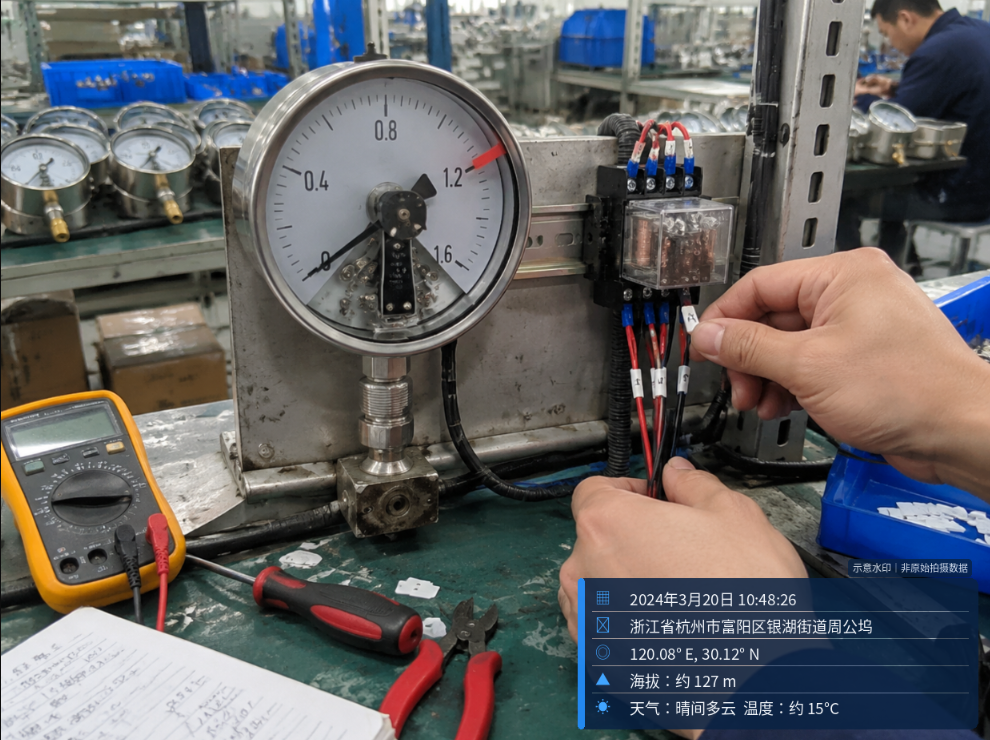
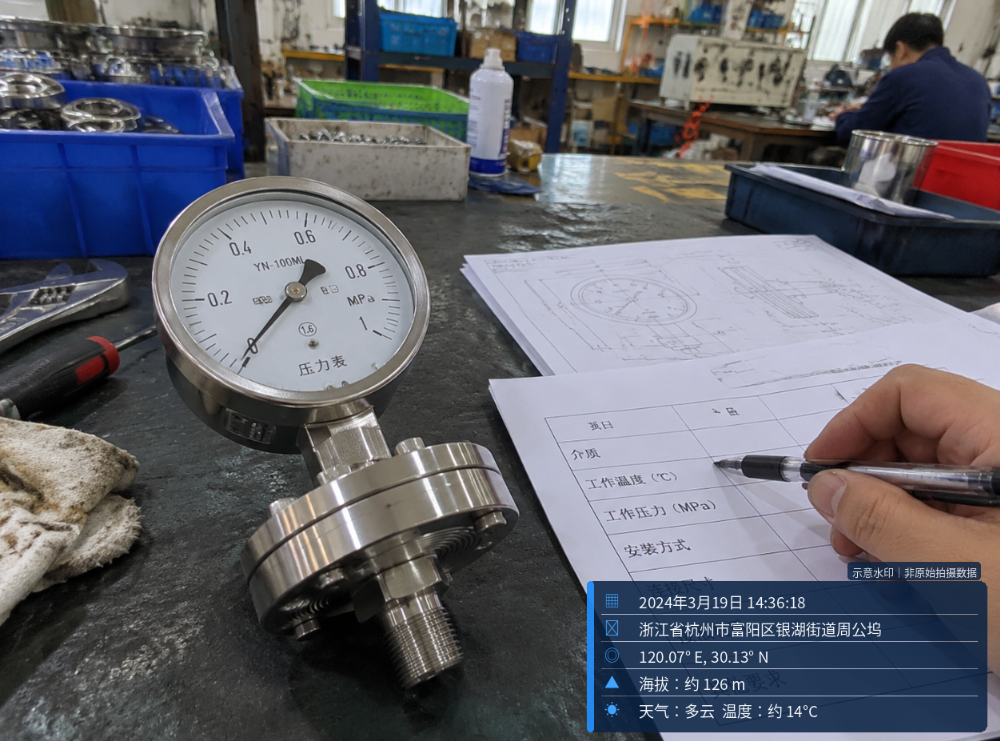
Samples shipped on 11 April, within the agreed 18 working days, and arrived on 15 April. Testing found no dual-scale conversion error, but the secondary MPa labels competed with the primary psi scale. The terminal drawing also needed a clearer viewing direction.
Ethan → NinaThe readings are within our agreed limits, but the MPa labels compete with the primary psi scale. Please reduce the secondary scale text. The terminal drawing also needs a clear “viewed from rear” note before we can release it.
Our technical team issued Rev3 artwork and wiring on 18 April, adding the rear-view orientation, terminal mapping and intermediate-relay illustration. After checking retained samples, we sent one revised Y-60 and one revised YXC-100 on 19 April at our expense, including courier charges. They arrived on 23 April.
Linking the price concession to a defined order
6–10 May 2024
The original quantity-tier calculation totalled USD 19,100. The customer proposed USD 17,500 and asked to reduce the diaphragm gauges from 100 to 30 units. We explained that 30 was below that specification’s 50-unit MOQ.
Nina → RachelWe can support USD 18,400 for the agreed mix. This includes the approved artwork and packaging configuration. The offer is based on the listed quantities, one shipment and 30/70 T/T terms.
The concession depended on retaining the six agreed quantities, using the approved revisions and shipping together. The customer’s first-order credit request remained subject to a separate assessment.
Starting the lead time from actual deposit receipt
17–20 May 2024
The customer sent remittance advice on 17 May. Our finance team confirmed receipt of the USD 5,520 deposit on 20 May. We kept the two events separate and corrected the customer’s assumption that the production clock had already started on the remittance date.
Scheduling around the longest production path
21 May 2024
Because all six types had to ship together, we scheduled diaphragm assembly and complete-assembly calibration as the critical path. Materials, artwork, packing and special inspection resources were reviewed together.
A proposal to use old stock dials to save time was rejected by the technical and sales teams. The approved revision list accompanied the production work orders.
Checking each function against its own acceptance plan
24 June–5 July 2024
Every unit received indication, appearance, marking and connection checks. Additional checks followed the approved plan for each gauge type; indication accuracy did not substitute for contact-function tests or complete diaphragm-assembly records.
| Model | Additional focus |
|---|---|
| Y-60 | Zero return and thread-gauge checks |
| YN-100 | Fill condition, sealing and installation/transport instructions |
| Y-60BF | Wetted-material records linked to batches |
| YE-100 | Suitable low-pressure test equipment and kPa marking |
| YN-100ML | Complete-assembly calibration, sealing and no-disassembly marking |
| YXC-100 | Upper/lower switching, hysteresis, repeatability and terminal mapping |
Six electrical-contact gauges exceeded the approved hysteresis limit during process inspection. We readjusted and retested them, retaining both initial and repeat inspection records. Indication-error examples used full scale as the calculation basis; acceptance remained governed by each complete inspection plan.
Reporting inspection readiness separately from shipment
8 July 2024
All 1,700 units were ready for the customer’s inspection on 8 July, ahead of the agreed latest date. We supplied the test summary and draft packing list, keeping the goods accessible by model for opening and inspection.
The customer asked about a late-July sailing. We explained that final shipment depended on inspection closure, balance receipt and the nominated forwarder’s arrangements; no unconfirmed vessel booking was promised.
Expanding verification after a label mismatch
10–15 July 2024
The agreed on-site plan covered all outer labels, 20 units from each of the four standard types and 10 each from the diaphragm and electrical-contact types for applicable checks. This was an order-specific plan, not a claimed universal sampling standard.
Functional sampling passed, but the representative found two of the ten diaphragm-gauge cartons labelled “G1/2” instead of the approved “1/2 NPT.” Shipment release was put on hold.
Julia → NinaReplacing the two labels alone will not close this finding. Please verify all 100 assemblies, identify why the old template remained available, and send evidence before reinspection.
We isolated all 100 diaphragm gauges, checked individual inspection records and rechecked every physical connection with suitable thread gauges. All units had the correct 1/2 NPT connection; the error came from an obsolete outer-label template.
We withdrew that template, replaced labels on all ten cartons and added a pre-packing revision check plus independent verification of model and connection fields. Correction was completed on 12 July. The customer’s representative reinspected on 15 July, and Julia signed off the closure. We bore correction and reinspection costs.
Supporting payment approval with the closure evidence
16–22 July 2024
| Bulk goods value | 18,400 |
|---|---|
| Deposit received | −5,520 |
| Original balance | 12,880 |
| One-time sample credit | −372 |
| Balance payable | 12,508 |
The order confirmation and deposit receipt satisfied the sample-credit timing conditions. After the label issue, the customer asked to retain USD 2,000 until receipt. We acknowledged its concern, supplied the accepted reinspection file and packing evidence, and held to the agreed full balance before shipment.
The customer agreed on 17 July. Internal approval delayed remittance from 18 to 19 July; the funds reached our account on Monday, 22 July. We explained the resulting change to the proposed warehouse handover and coordinated the revised arrangement with the forwarder.
Releasing one verified final packing list
23–24 July 2024
We checked individual white boxes, cushioning inserts and protective caps before final sealing. Type-specific materials included liquid-filled gauge installation instructions, batch-linked material details, low-pressure warnings, diaphragm no-disassembly notices and English contact-gauge wiring diagrams.
| Model | Units/carton | Cartons | Size, cm | Gross kg/carton |
|---|---|---|---|---|
| Y-60 | 100 | 6 | 45 × 35 × 30 | 12 |
| YN-100 | 40 | 10 | 48 × 38 × 32 | 15 |
| Y-60BF | 50 | 6 | 45 × 35 × 30 | 11 |
| YE-100 | 25 | 6 | 48 × 38 × 32 | 9 |
| YN-100ML | 10 | 10 | 50 × 40 × 35 | 10 |
| YXC-100 | 15 | 10 | 48 × 38 × 32 | 10 |
| Total | 1,700 units | 48 | 2.31 m³ reported* | 542 kg overall |
Volume reconciliation pending. The source reports approximately 2.31 m³, but the listed carton dimensions and counts calculate to approximately 2.78 m³. The reported total is retained as source data and should be verified against the final packing document before freight booking.
A draft YXC-100 packing row could not reconcile to 150 units. We corrected it before issuing the signed list. An earlier email’s figures of 55 cartons, 559 kg and 2.51 m³ were explicitly withdrawn. The customer and forwarder both confirmed Rev2 as the controlling document.
Following the shipment through the nominated forwarder
25 July–30 August 2024
Goods reached the customer’s nominated forwarder’s warehouse on 25 July and loaded at Ningbo on 29 July as an LCL sea shipment. We completed the agreed export formalities and checked the draft bill of lading. The customer arranged main carriage, insurance and destination handling.
In this case, the agreed FOB risk-transfer point was loading on board at the shipment port. Booking, payment and warehouse handover were recorded as separate events. When the forwarder revised the arrival estimate from 26 to 30 August, we shared its confirmed update without speculating about vessel position.
Recording packaging condition at warehouse receipt
5 September 2024
The customer received all 48 cartons. Warehouse staff recorded compressed corners on two cartons on the delivery receipt and photographed them before opening. An outer-carton issue was not treated automatically as a manufacturing defect.
Closing receiving inspection against the approved baseline
6–11 September 2024
The customer checked quantities, markings, connections and material documents, sampling ten units from each type under its approved receiving plan. Diaphragm records were checked as complete assemblies; contact gauges were verified in the approved relay circuit.
Julia → NinaReceiving inspection is closed. The sampled units meet the agreed acceptance criteria, and the material records match the marked batches. Please keep the approved revision set unchanged for replenishment orders.
A warehouse question about YE-100’s lack of a psi scale was resolved by checking its approved single-kPa specification. No new criterion was added on the basis of reading preference.
Replenishing the products supported by actual demand
10–18 October 2024
By 10 October, the customer had issued 280 of its 600 Y-60 gauges and 160 of its 400 YN-100 gauges. The other four types were moving more slowly. Technical feedback from a current air-treatment-module installation met the approved connection and readability requirements; it was short-term feedback, not long-term performance validation.
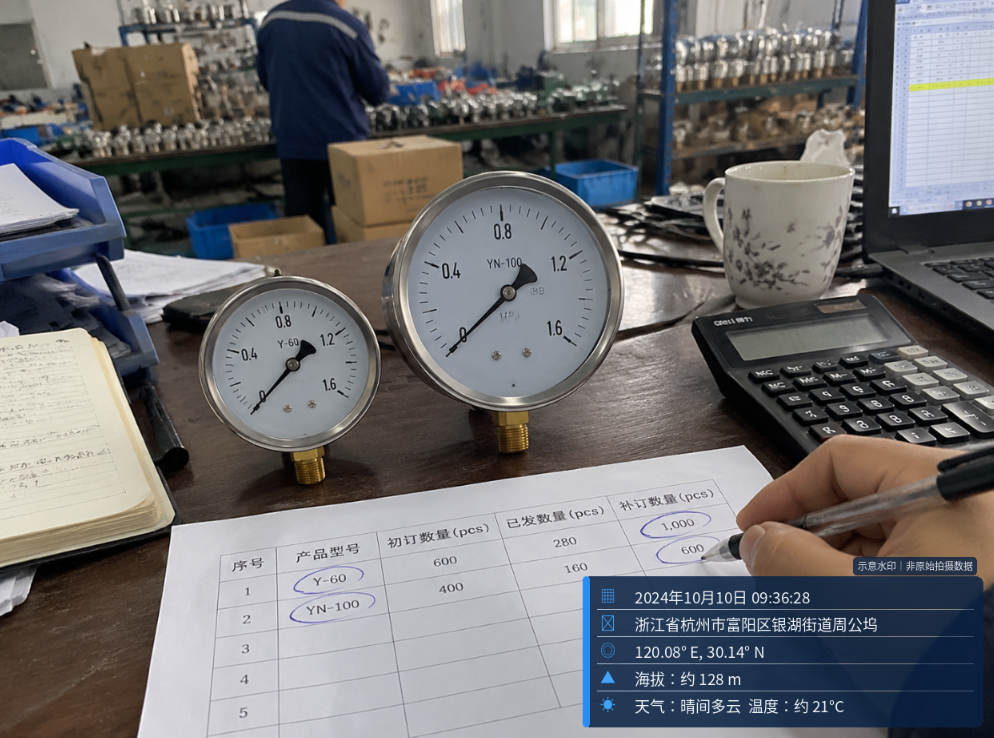
The customer chose to replenish only the two faster-moving types. We retained the approved configuration and applied the corresponding quantity-tier prices.
| Model | Quantity | Unit price, USD | Amount, USD |
|---|---|---|---|
| Y-60 | 1,000 | 2.90 | 2,900 |
| YN-100 | 600 | 7.80 | 4,680 |
| Total | 1,600 | 7,580 |
The customer again requested credit terms. Both parties agreed to retain 30/70 T/T for this order and review future credit separately. The agreed deposit was USD 2,274 and the balance USD 5,306; the sample credit had already been used on the first order.
What this supply program required
A shared technical baseline, model-specific inspection records and a clear route for closing discrepancies supported the first order’s acceptance. Replenishment followed the customer’s actual consumption and approved specifications.
Back to overview ↑