Reviewing installation conditions before pricing
3–7 March 2025
On 3 March, we received an inquiry for three pressure gauge types, together with photos of the existing products and a purchasing list. Complete connection drawings were missing, so compatibility with the existing equipment ports could not yet be confirmed.
Dear Sales Team,
We are reviewing a direct source for pressure gauges used on our compressor and air-treatment modules. Please quote 600 pcs of Y-60, 400 pcs of YN-100 and 200 pcs of YE-100 with our logo. Can the total quantity qualify for your best price? Please also confirm whether your G threads fit our existing ports.
On 4 March, we requested mating-port drawings, sealing arrangements, operating media, normal working pressures and pressure fluctuations so that each application could be reviewed separately.
Anan explained that the first two types served compressed-air measuring points, while YE-100 served a low-pressure point in an air-treatment module at a normal operating range of 2–6 kPa. Zhou Ming requested separate confirmation of the three installation positions: their association with compressor equipment did not justify using the same test-pressure source.
On 5 March, Grace provided quantity-tier pricing for fixed configurations:
| Product | Tier 1 | Tier 2 | Tier 3 |
| Y-60 | 200–499 units: USD XXX | 500–999 units: USD XXX | ≥1,000 units: USD XXX |
| YN-100 | 100–299 units: USD XXX | 300–599 units: USD XXX | ≥600 units: USD XXX |
| YE-100 | 50–149 units: USD XXX | 150–299 units: USD XXX | ≥300 units: USD XXX |
These were FOB Ningbo unit prices for each fixed configuration. The combined quantity across the three types did not determine the price tier.
The customer requested the highest quantity-tier price based on 1,200 units combined, while proposing to reduce the low-pressure gauges to a 30-unit trial. We reviewed each type's cost and MOQ with production before confirming a package offer.
On 6 March, the customer followed up, explaining that a missing low-pressure gauge would also affect completion of the module:
Kanya: Grace, could you update the price today? We need to shortlist suppliers tomorrow. The low-pressure gauge is a small item for us, but a missing gauge can hold the whole module.
On 7 March, Grace replied:
Dear Ms. Kanya,
Thank you for waiting while we reviewed the mixed order. The three models use different materials and inspection processes, so their quantities cannot share one price tier. For this specific 1,200-piece package, we can offer USD XXX / XXX / XXX, provided the approved configurations remain fixed. The first-order MOQ for YE-100 remains 50 pcs per configuration.
The customer agreed to proceed with samples. Bulk pricing remained provisional until sample and configuration approval. Both parties reviewed G-thread connections and sealing requirements against mating-port drawings; G, NPT and other connections were not treated as interchangeable.
Recording the sample-credit conditions in the PI
10 March 2025
The customer confirmed four samples of each type. The respective sample unit prices were USD XXX, USD XXX and USD XXX; the total sample goods value was USD XXX, with a courier charge of USD XXX.
Dear Grace,
Please proceed with four samples of each model. Kindly state the sample credit clearly on the PI. We do not want a different interpretation when the bulk order is placed.
Grace stated the conditions in the revised PI:
Sample goods value of USD XXX will be credited once against the bulk balance if an order of at least 1,000 pcs, meeting each configuration’s MOQ, is placed within 75 days after sample approval. Courier charge of USD XXX is non-creditable.
Finance confirmed receipt of USD XXX, and Anan approved the sample drawings the same day. Both lead-time trigger conditions were met on 10 March.
The sample order became effective, with dispatch agreed within 12 working days.
From sample testing to revised identification and approval
10 March–10 April 2025
The factory reviewed the order on 10 March, dispatched 12 samples on 26 March, and the customer received them on 31 March.
On 1 April, Anan reported that one YE-100 did not return to zero after depressurization and initially questioned product consistency.
Hi Grace,
One YE-100 does not return to zero after our workshop test. Please check this urgently. Also, the low-pressure identification is not obvious enough when the three models are placed together.
Grace did not immediately attribute the issue to customer operation. During a video meeting on 2 April, both parties reviewed the test records and confirmed that the low-pressure gauge had been connected to an approximately 0.2 MPa source, equivalent to about 200 kPa, far above its 10 kPa full scale.
Zhou Ming requested that this test method stop immediately and the affected gauge be isolated. The records supported an overpressure-damage assessment, but final cause determination still required physical examination.
The meeting also exposed an identification weakness: although the approved dial used only kPa, the low-pressure wording was not prominent enough. We addressed that design issue as well as the test-pressure mismatch.
Hi Anan,
Please keep the affected gauge out of service. The recorded test pressure is far above the 10 kPa range. We will strengthen the low-pressure identification and provide two replacement samples for verification. This change improves identification; it does not make the gauge overpressure-proof.
We agreed three changes with the customer:
- Add prominent LOW PRESSURE wording to the YE-100 dial while retaining the single kPa scale.
- Add LOW PRESSURE / kPa to the individual box; reinforce range verification and avoidance of high-pressure-source misconnection in the English instructions.
- Establish a separate customer test station for low-pressure samples, with the test ceiling governed by the mutually approved procedure.
We covered two replacement samples and the additional shipment. The original sample-credit amount remained USD XXX. Replacements shipped on 3 April and arrived on 7 April; Anan completed repeat testing and signed approval on 10 April.
All three sample types received final approval on 10 April, starting the 75-day sample-credit eligibility window.

Translating approved samples into order configurations
18 April 2025
The customer placed the bulk order for 600 Y-60, 400 YN-100 and 200 YE-100 gauges.
Hi Grace,
Please issue the bulk PI for the agreed 1,200 pcs. All production must follow the approved samples and the revised YE-100 dial. No thread or packing substitution without our written approval.
The PI linked each customer part number to its drawing revision, packing artwork, amount and sample-credit terms. One consolidated delivery was agreed.
The order and budget were approved, pending the deposit and final document confirmation.
The bulk order confirmed on 18 April fell within 75 days of sample approval. Its total quantity and each configuration's MOQ met the sample-credit conditions.
Verifying deposit receipt and document approval separately
23 April 2025
Hi Kanya,
We confirm receipt of USD XXX today. The final drawings and packing artwork are also approved. The 40-calendar-day production period starts from today, with goods ready for inspection by 2 June.
Finance confirmed actual deposit receipt. Technical drawings and packing artwork were approved the same day, and Grace issued the order-effectiveness notice.
The bulk order became effective, with inspection readiness due by 2 June. Sailing arrangements were handled separately.
One delivery schedule, three controlled configurations
24 April 2025
Wang Jianguo: “Issue and track materials separately by customer part number. Use only the RevB dial for YE-100 and stop using the old packing artwork. Reserve time for YN-100 filling and observation rather than scheduling those operations after the other two types are finished.”
Production instructions were released after checking materials, first articles, dial revisions and packing artwork. Separate production-traveller records were established for the three customer part numbers.
The order entered production, with a brief progress update sent to the customer each week.
Matching inspection conditions to each pressure range
28–30 May 2025
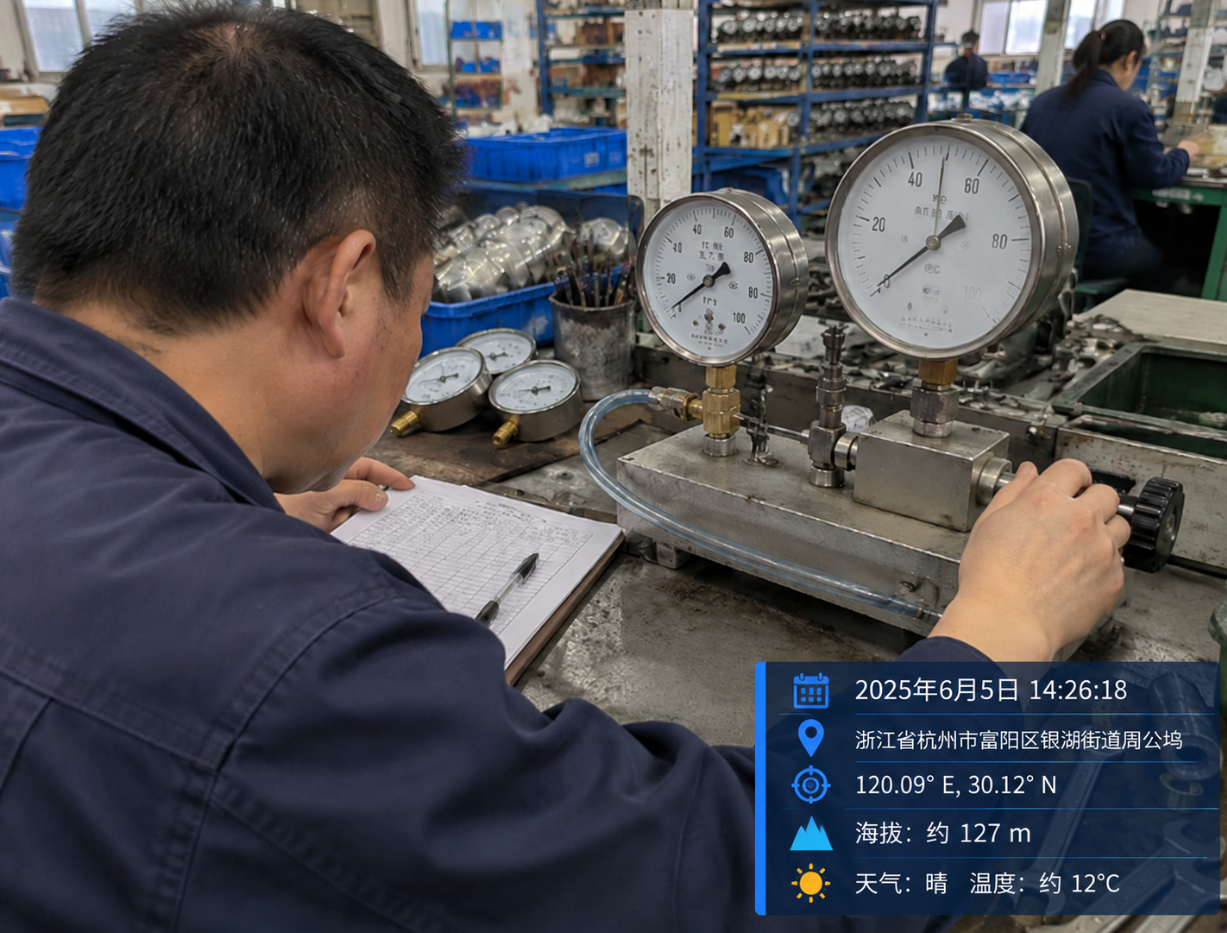
Chen Lan: “YE-100 requires equipment and procedures suitable for its low-pressure range. File the three types' records separately; a single inspection-passed summary is insufficient.”
The approved inspection plan covered indication, zero return, appearance, connections and assembly. YN-100 also received fill-condition and leakage checks. Indication results were assessed against each product's accuracy class and the agreed method.
Internal performance and appearance inspection passed. Packing revisions still required verification during final packing and customer inspection.
Confirming inspection readiness before shipment release
2 June 2025
Hi Kanya,
All 1,200 gauges are ready for your representative’s inspection. Please confirm his visit for 4 June. Shipment booking will be finalized after inspection closure and receipt of the balance.
All three types entered the inspection-hold area, with inspection units, approved samples, drawings and packing materials prepared.
The customer confirmed that its representative would visit on 4 June.
Holding release after a packaging-label finding
4–6 June 2025
The parties agreed an order-specific sampling plan in advance: 80 Y-60, 50 YN-100 and 32 YE-100 units. These quantities defined the agreed inspection scope for this order.
Sampled function and connection checks passed, but five of the 32 YE-100 boxes lacked the prominent low-pressure warning. Niran requested a hold on release of the entire order.
Hi Grace,
The inspected gauges passed the agreed functional checks, but five YE-100 boxes carry the old artwork. This is a repeat-prevention issue because we discussed low-pressure identification during sampling. Please screen all 200 pcs and submit evidence before release.
Investigation found that packaging staff had used old labels left over from trial packing. Samples and drawings had been revised, but obsolete-material withdrawal had not been fully closed.
Chen Lan organized screening of all 200 YE-100 boxes, finding 28 without the revised warning. The factory replaced the warning labels on all 200 boxes and checked the customer part numbers.
Corrective actions included:
- Withdraw obsolete labels and retain quantity and disposal records.
- Check model, part number and low-pressure identification on all 200 boxes.
- Add two-person packaging first-article approval and record the revision used.
- Send correction photos, full-screening records and cause analysis to the customer.
- Have Niran reinspect on 6 June, with Anan remotely confirming the approved revision.
Grace: We accept the finding. Production passed the updated dial requirement, but our obsolete-label control failed at trial packing. All YE-100 boxes have now been rechecked and relabelled. Please review the attached closure report before confirming shipment release.
The correction closed on 6 June and the customer accepted the inspection documents. Payment prerequisites were met, but financial release was still pending.
Supporting balance approval with closure evidence
6–12 June 2025
After receiving the correction file, the customer proposed paying most of the balance while retaining USD XXX until incoming inspection.
Hi Grace,
Given the labelling finding, our director would like to retain USD XXX until incoming inspection. Can you release the shipment after we pay the remaining USD XXX?
Grace checked the calculation before explaining the agreed payment terms:
Hi Kanya,
The balance after the agreed sample credit is USD XXX. We understand why your director requested additional assurance. The finding has been closed by your representative, and we have attached the signed reinspection and full screening records. We request that payment follow the agreed pre-shipment terms. We can also provide final carton photos and arrange a video check before collection.
Grace added no unagreed charges and did not make label correction conditional on the customer waiving claims. She offered a final-packing video check and a channel for reporting arrival discrepancies. Responsibility remained subject to the order terms and evidence.
On 9 June, the customer accepted the original payment terms, but Mali's payment batch required renewed operations-director approval. Remittance advice arrived on 10 June; actual bank receipt was not confirmed until 12 June.
Mali: The transfer has been submitted, but the bank confirmation is still pending. Please do not treat the advice as cleared funds. We will update you once confirmed.
Amount reconciliation: goods value USD XXX − deposit USD XXX − sample credit USD XXX = balance USD XXX.
The full balance arrived on 12 June. Grace confirmed that collection and shipment could be arranged.
Reconciling the final packing list with the goods
13 June 2025
Hi Kanya,
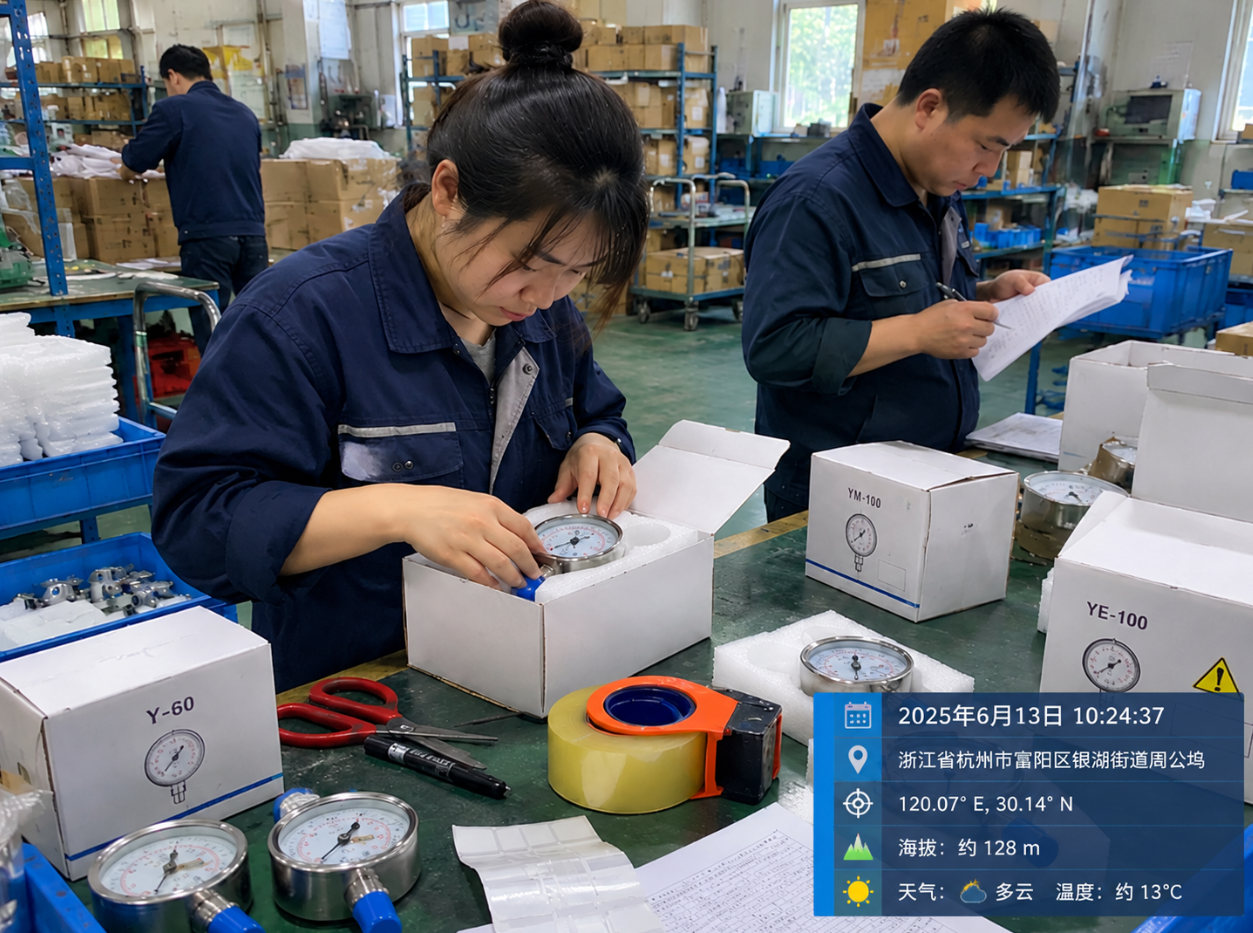
Final packing is complete: 24 cartons, separated by customer part number. The YE-100 low-pressure warning is visible on both the individual boxes and the corresponding outer cartons. Please find the final packing list and photos attached.
Individual white boxes, inserts, protective caps and outer cartons were completed. Products were separated by model, with boxes, cartons and the packing list checked against customer part numbers.
The order comprised 24 cartons: Y-60, six cartons of 100 units; YN-100, ten cartons of 40 units; YE-100, eight cartons of 25 units. Total: 1,200 units.
We checked outer-carton models, quantities and carton numbers by customer part number. YE-100 cartons also retained prominent low-pressure identification.
All 24 cartons were sealed, awaiting handover to the customer's nominated forwarder.
Recording collection, loading and arrival separately
16–24 June 2025
Hi Kanya,
Your nominated forwarder collected the 24 cartons on 16 June. The confirmed onboard date is 19 June, with estimated arrival at Laem Chabang on 24 June. Please check the consignee details on the B/L draft today.
We arranged export customs clearance and coordinated loading. The customer's nominated forwarder arranged sea freight. Both parties checked the bill-of-lading consignee, package count, weight and destination port.
The shipment loaded on 19 June and arrived at Laem Chabang on 24 June. The customer arranged transport insurance separately; it was not included in this order's FOB goods value.
Checking quantity and packaging condition on receipt
27 June 2025
Hi Grace,
We received all 24 cartons today. One outer carton has a compressed corner, but the inner boxes appear intact. We have photographed it and kept the affected units separate for incoming inspection.
The customer completed customs clearance and warehouse receipt, checking all 24 cartons, customer part numbers and carton numbers. One Y-60 carton with a compressed corner was photographed and isolated.
The initial quantity check reconciled. Goods proceeded to incoming inspection, with additional checks for the affected carton.
Basing incoming acceptance on inspection records
30 June–4 July 2025
Hi Grace,
Incoming inspection is closed. We checked 1,200 pcs for identity and packing, tested 60 Y-60, 40 YN-100 and 20 YE-100 against our agreed criteria, and found no rejection in those functional samples. All units in the compressed carton passed the additional visual inspection.
The customer checked identification, quantity and packing across all units, then sampled function and installation fit under its approved procedure. All 100 Y-60 units in the compressed carton received additional visual inspection; ten were included in functional sampling.
The batch was accepted under the customer's procedure, with no rejection recorded in the completed sampled-function and installation checks. The conclusion applied only to that inspection scope.
Turning consumption and production plans into replenishment
8 August 2025
By 7 August, the customer's records showed production issues of 380 Y-60, 250 YN-100 and 120 YE-100 units. Remaining inventory was 220, 150 and 80 units respectively.
Approved next-cycle demand was 700, 450 and 220 units, with safety stocks of 100, 100 and 50. Demand plus safety stock minus existing inventory produced shortfalls of 580, 400 and 190 units respectively.
Considering MOQ and spare-parts needs, the customer requested 600, 400 and 200 units respectively: 1,200 units in total.
Hi Grace,
The first batch has helped us standardize the three gauge positions. Our assembly team no longer needs an adaptor at the approved ports, and the separate kPa identification is useful at the low-pressure station. We have issued 750 pcs to production so far, with no gauge-related line stoppage recorded in that period.
Please quote a repeat order of 600 / 400 / 200 pcs, using exactly the approved configurations. We also need the packing-version check included in your pre-shipment report.
Grace replied:
Hi Kanya,
Thank you for the usage figures. We can maintain the same unit prices for this repeat quantity, subject to the quotation validity and unchanged specifications. The USD XXX sample credit was fully used on the first order and will not be applied again. We will include the packing-version check in the inspection package.
The customer converted inventory, demand and safety-stock figures into a repeat order. We reviewed configurations, quotation validity and capacity before issuing a new PI.
The customer's operations director approved the repeat order and a PO was issued on 8 August. Deposit receipt and subsequent fulfilment remained to be tracked.