 Dongyayibiao
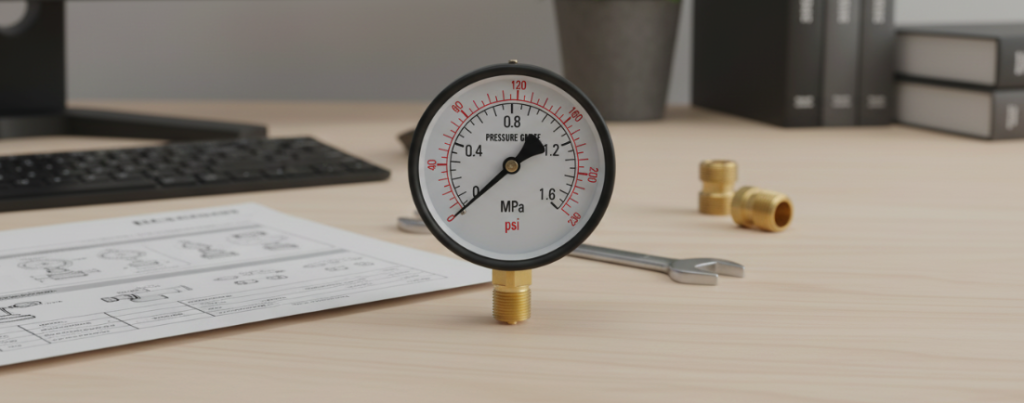
Can I Use Air Pressure Gauge For Water
12Thinking Of Using An Air Pressure Gauge On Water Pipes? Learn Why This Leads To Failure, Corrosion, And Dangerous Water Hammer.
View detailsThe core tools for measuring air duct pressure are digital differential pressure gauges and mechanical differential pressure gauges.
These devices are collectively referred to as differential pressure gauges and are essential tools for measuring static pressure, total pressure and dynamic pressure in ventilation systems. At the current engineering site, the dual-port digital differential pressure gauge has become the standard in the industry. When measuring small pressure increments , its high precision and sensitivity are really not to be said. The meter alone is not enough, you have to cooperate with the static pressure probe and rubber hose together, so as to accurately calculate the external static pressure of the air handling unit, or the pressure drop before and after the filter and evaporator coil. The old U-tube pressure gauge is now basically only used in textbooks to explain physical principles. In actual work, the response speed and diagnostic function of the digital meter are the only choices to ensure that the system meets the manufacturer’s specifications.
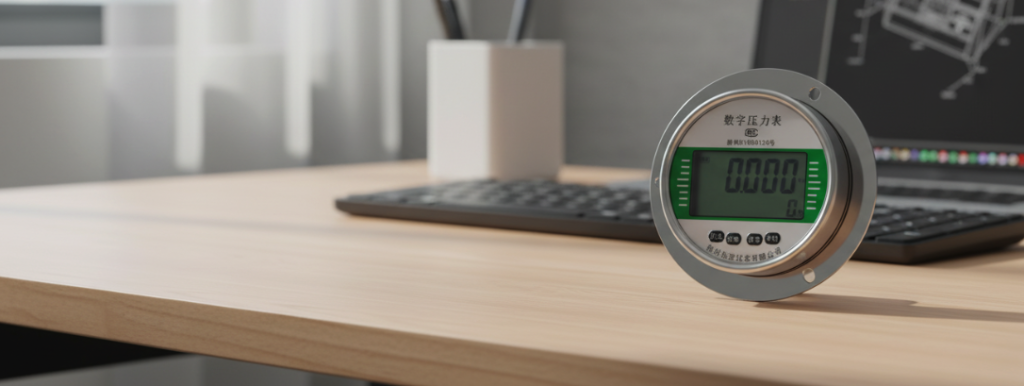
Digital differential pressure gauges are different from those old-fashioned analog meters.This dual-port device uses electronic sensors to compare the pressure between two specific points in the air duct system.
Double-port function: This meter has two interfaces, which can automatically help you calculate the pressure difference. When you need to know the pressure changes before and after a component, this function is simply a necessity.
Micro-range accuracy: The pressure of civil and commercial air duct is usually very low. The digital meter can read the accuracy of 0.01 in. Which is very critical and can help you find hidden dangers that mechanical watches cannot detect at all.
Advanced features: Most of the current digital meters have “read lock ” and backlit display, which is very practical in a dark attic or computer room, and can switch between inches of water and Pascal at any time.
Although I prefer to use digital meters for on-site maintenance, the position of mechanical Magnehelic differential pressure meters in the industry is still very stable, especially in fixed installation and heavy commercial monitoring scenarios.
Mechanical linkage: This watch drives the pointer on the diaphragm. Its core value is that it does not require batteries or an external power supply. This gauge is perfect when monitoring filter pressure drop on a large air handling unit.
Durability: In some places where the environment is extreme, the vibration is severe or the electronic components are easy to fail, the mechanical watch is the technician’s last “safety bolt” and will never strike because of no electricity or interference.
No matter how good the meter itself is, it is useless if the connection is not effective. To accurately transmit the air pressure in the air duct to the sensor in your hand, these two accessories are mandatory:
Static pressure probe: This special metal probe usually has a 90-degree elbow. The above hole design is very exquisite, it can offset the impact of wind speed, only grab the lateral “static pressure”. If you push the pipe directly into the air duct without a probe, the wind will blow straight at the nozzle and the reading will definitely be out of order.
Rubber hose: flexible and air tight pipe must be used. The connection must be tight, even if it is a leak with a large needle tip, the external static pressure you measured will be ridiculously wrong.
Static pressure: A simple understanding is the “squeezing force” produced by the air on the air duct wall. This is the most commonly used indicator for troubleshooting blocked air ducts.
Total Pressure: The sum of static and dynamic pressures.
Dynamic pressure: This is the pressure generated by the flow of air. If you use a Pitot tube on the differential pressure gauge, you can measure the dynamic pressure alone, and then calculate the exact air volume.
External static pressure: one probe is put into the front of the fan coil and one probe is put into the back of the fan. If the ESP is higher than the rated value on the equipment nameplate, the system air volume will shrink and the motor will not be far from burning.
Pressure Drop: We can determine the state of a particular component by measuring the pressure before and after it. For example, measuring the pressure drop before and after the high-efficiency filter can let you know exactly when to change the filter screen, which is much more professional than the naked eye.
As long as you can master the use of dual-port digital differential pressure gauges and matching probes, you can grow from an apprentice who can only “change parts” to a professional technician who can speak by data and accurately adjust the system. Remember, the meter must be calibrated regularly, the tube must not be discounted, and the measurement must be reset to zero before.
Author: Marcus Thompson
Throughout my career, I’ve optimized thousands of complex commercial and residential HVAC systems to ensure peak efficiency. I am passionate about mentoring the next generation of technicians by bridging the gap between textbook theory and real-world field reality, helping them master the precision tools that define a true professional.”
Thinking Of Using An Air Pressure Gauge On Water Pipes? Learn Why This Leads To Failure, Corrosion, And Dangerous Water Hammer.
View details
Mechanical Vs. Electronic: Discover The Key Differences Between Pressure Gauges And Transmitters For Industrial Control.
View details
Learn How Differential Pressure Transmitters Work, From Sensor Mechanisms To Industrial Signal Conversion And Applications.
View details
Learn How Digital Pressure Gauges Work Through Sensors, ADCs, And Microprocessors For High-Accuracy Measurement.
View details
HelloPlease log in