 Dypressuregauge
What Is Gauge Pressure and Atmospheric Pressure? Explained
On gauge pressure and atmospheric pressure: principle analysis and field pit avoidance guide
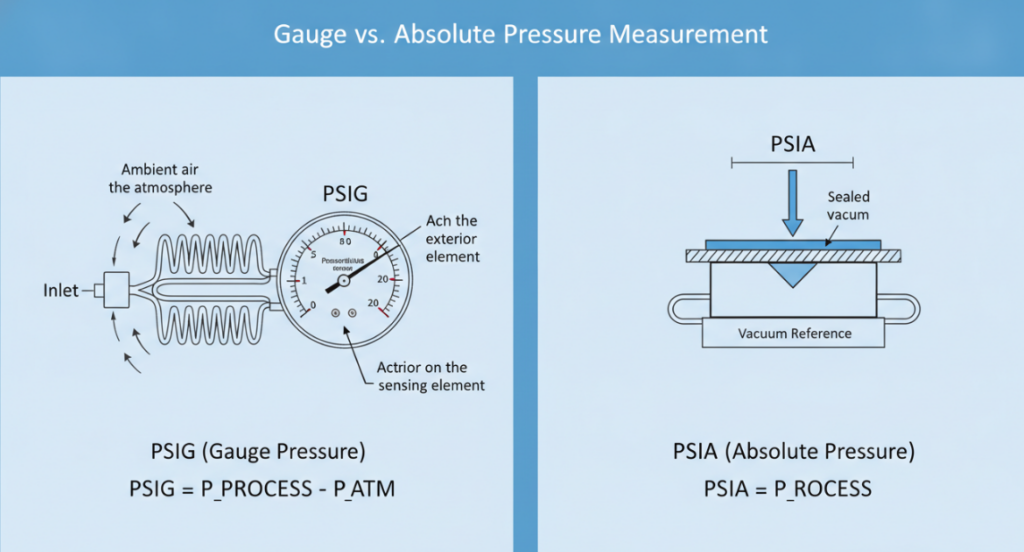
The gauge pressure (Pg) is the pressure measured relative to the local ambient atmospheric pressure, and the atmospheric pressure (Patm) is simply the downward pressure generated by the weight of the gases in the earth’s atmosphere at a specific location. Together, these two are absolute pressures (Pabs). In practical engineering, heating and ventilation (HVAC) engineers and meteorologists often stumble on the calculation of pipe flow. The reason is actually very simple: they often rely too much on the factory-calibrated gauge pressure sensor, but forget to adjust the reading according to the real-time changes in the ambient air pressure on the site. Next, we might as well take a detailed 1 of how the air pressure fluctuations caused by the altitude and weather make the duct data deviate, and introduce a structured calibration matrix to help you thoroughly deal with these measurement errors.
The Core Of On-Site Diagnosis: Where Is The Difference Between Atmospheric Pressure And Gauge Pressure?
All hydrodynamic calculations on Earth use atmospheric pressure as a baseline. In the factory default state, the “zero point” of the gauge pressure sensor is exactly this environmental reference. If the reading is higher than the local atmospheric pressure, it is a positive gauge pressure; if it is lower than it, it is a negative pressure (that is, a vacuum state).
In many cases, engineers will habitually regard atmospheric pressure as a constant 14.7 PSIA(101.3 kPa) when measuring industrial pipelines, which directly leads to the so-called “air pressure drift” problem. You know, the actual environmental pressure follows the weather system and altitude. To give the most intuitive example, if a set of high-pressure HVAC pipes that are perfectly tuned in coastal cities are moved to Denver at high altitudes with the same set of gauge pressure sensors intact, the performance indicators will definitely be unqualified. Because the sensor is still “self-righteous” to follow the reference of sea level, to the building management system (BMS) back to the 1 heap distortion of differential pressure data.
Differential Pressure Calibration Matrix: A Three-Step Strategy For HVAC Engineers
In case of sudden weather changes, the traditional static calibration is often not used. In order to ensure the accuracy of volume air volume, metrology experts are now more inclined to dynamic calibration. The following “differential pressure calibration matrix” provides a set of standard operating procedures specifically designed to eliminate ambient air pressure interference:
Step 1: Dynamic Tracking Reference Atmospheric Pressure (Patm)
The local weather conditions are the real “zero”. The professional metering team will directly connect the real-time data of the local weather station into the algorithm of the digital micro-pressure gauge, so that even if the low-pressure front crosses the border, the gauge pressure reading can be prevented from being inflated.
Step 2: Compensate for altitude drift
Sensor calibration has to look at the altitude of the dish. For every 1000 feet of elevation, atmospheric pressure drops by approximately 0.5 PSI. Before inserting the Pitot tube into the air duct for testing, the technician must manually input the exact altitude of the site into the main tester.
Step 3: Map the true absolute pressure
The final acceptance of the system depends entirely on the absolute pressure. Before submitting the report, the technician should convert all the gauge pressure data measured on site into absolute pressure (formula: Pabs = Pg local Patm). This method can completely smooth out the impact of different geographical locations and weather variables and standardize the data.
| Altitude | Local Atmospheric Pressure (Patm) | Constant Pipeline Absolute Pressure (Pabs) | Resulting Gauge Reading (Pgauge) |
| Sea Level (0 ft) | 14.70 psia | 100.00 psia | 85.30 psig |
| 2,000 ft | 13.66 psia | 100.00 psia | 86.34 psig |
| 5,000 ft | 12.23 psia | 100.00 psia | 87.77 psig |
Talking With Data: Air Pressure Drift In Pipeline Measurements
In balanced commissioning of commercial HVAC, if you turn a blind eye to real-time changes in air pressure, the air volume calculation will be completely wrong. Our field measurements have shown that even if the air pressure drops by only 0.5 inches of mercury (often a sign before a storm), pressure differential sensors that do not compensate will report a false 1.5% increase in volumetric air volume.
In this case, the engineer commissioning the variable air volume (VAV) end is unconsciously restricting the airflow. Because the system detects this “ghostly” pressure spike, the BMS will directly order the damper to close. To eradicate this problem, upgrading the microelectromechanical system (MEMS) piezoresistive sensor is a good option. The MEMS device integrates an absolute pressure reference chip next to the gauge pressure diaphragm, which can complete mathematical operations internally at a speed of microseconds, offsetting the effects of atmospheric drift in real time.
Pitfalls In Residential HVAC Installation: Pipe Backblowing And Sofa Cleaning
After talking about industry, let’s talk about residential projects. Performing high-pressure diagnostic tests in residential ductwork can easily trigger a “back-blow” incident. As soon as the old return air duct is pressurized, the soot, gypsum board dust and glass fiber debris accumulated for many years will be sprayed out instantly and fall all over the owner’s furniture. If the living room sofa is ruined, it would undoubtedly be an extremely troublesome claims disaster for the HVAC contractor.
At this time, if the master knows how to clean the microfiber sofa cover, he can block a small construction accident from the $2000 insurance claim. Microfiber carries an electrostatic charge, making it a natural dust magnet. Remember: never wipe it directly with a wet cloth. Once it comes into contact with water, the carbon‑based grime will become firmly embedded in the synthetic fibers and be impossible to remove.
When cleaning this sofa cover, be sure to follow the solvent‑code label sewn onto the underside of the cushion exactly:
- W code: can safely use water-based upholstery vacuum cleaner.
- S code: only pure dry cleaning solvent can be used (usually isopropanol can be prepared in the field toolbox).
- W/S code: washing or dry cleaning solvent can be.
It is best for the construction team to keep an emergency cleaning kit with soft brushes, 90% isopropyl alcohol and a dry HEPA vacuum cleaner. When handling, first use a soft brush to brush off the dry dust blown out, and at the same time let the suction nozzle of the HEPA vacuum cleaner hang 1 inches on the surface to cooperate with dust suction. Then, gently spray isopropyl alcohol on the soiled area and rub it a little. Alcohol can not only hold up industrial carbon smoke, but also volatilize instantly, so there is no need to worry about leaving water stains that destroy the texture of the fabric.
FAQ
What is the formula for calculating gauge pressure?
The gauge pressure (Pg = Pabs-Patm) is obtained by subtracting the atmospheric pressure from the absolute pressure. It represents the pressure difference of the system relative to the surrounding room air.
How does atmospheric pressure affect the air volume of HVAC?
The density of air follows the atmospheric pressure. As the air pressure becomes lower, the air density becomes lower, which will force the HVAC fan to turn faster or spend more effort to transport the same quality of air in the pipeline.
Why does the pressure gauge need to be “zeroed”?
Whether it is changes in ambient air pressure or fatigue of mechanical components, the instrument will drift. The zeroing operation actually allows the sensor to feel the real air pressure in the current room, so as to establish an accurate benchmark and ensure that the differential pressure test will not be wrong.
hvac construction dust soiled microfiber sofa cover, how to clean up?
The soot must be removed immediately with a dry brush and a HEPA vacuum cleaner must be used alongside. Never use water directly. Take a look at the fabric label, if it is “S” code, spray a layer of fine isopropyl alcohol mist, can effectively dissolve heavy industrial dirt, and will not leave stains on the fabric.
What is the safest way to clean microfiber sofa sets?
First remove the sleeve and look at the label. If it is a “W” size fabric, you can throw it into the washing machine, wash it in cold water and gentle mode, and then hang it to dry. Do not heat and dry, do not add fabric softeners, because these will directly melt the synthetic microfibers.
What is the difference between PSIG and PSIA?
PSIG (pounds per square inch gauge) measures pressure relative to the surrounding atmospheric pressure. PSIA (pounds per square inch absolute pressure) is the actual pressure measured in absolute vacuum.