 Dypressuregauge
Bi Metal Stem Thermometers Should Be Calibrated
According to the dead regulations of the FDA and ServSafe, bimetallic rod thermometers must be calibrated in four extremely specific situations to ensure absolute food safety. Specifically: before the start of each shift or before the first shipment arrives, after a drop or severe impact, after experiencing extreme temperature changes, and as part of daily routine maintenance. To get the error stuck within the legally required +/- 2°F or +/- 1°C, catering workers use the freezing point method, submerge the probe over the small indentation, and then adjust the calibration nut with a wrench. By honestly monitoring these few calibration moments, you can avoid cross-contamination, reduce the risk of foodborne illness to zero, and ensure your commercial kitchen never wanders into temperature danger zones.
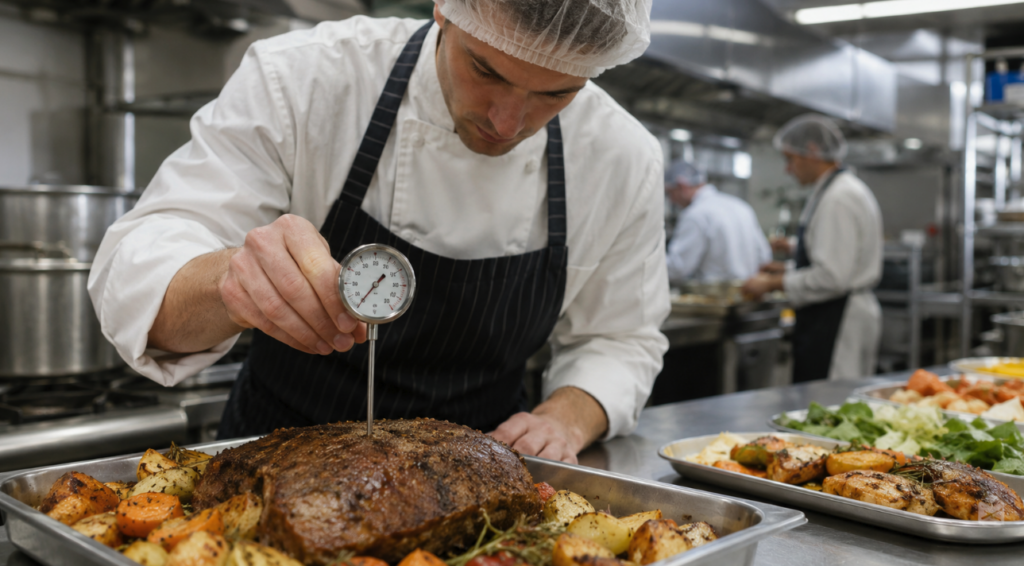
4 Specific Situations That Must Be Calibrated
The FDA standard clearly states that the coil spring inside a bimetallic thermometer can be misaligned. To maintain the legally mandated +/- 2°F food-grade accuracy, you must calibrate your device immediately when the following four conditions occur:
Before the start of each shift, or before the first shipment arrives
Calibration is really not some face-saving project that is done once a month; it is a daily necessity. Before your morning prep starts, or before you sign for today’s first batch of raw meat and dairy products, you must approve your thermometer. It’s like setting a reliable baseline for a full day’s work, ensuring every ingredient you put in or cook out is under precise monitoring from the first minute.
Calibrate immediately after falling or being hit hard
Commercial kitchens and food processing plants have always been places where wars are fought. If a bimetallic rod thermometer rolls off the countertop and falls to the ground, or is slammed down on the prep table, this physical impact can loosen the coil and calibration nut inside in an instant. In my experience, don’t take chances and think you can still get it right if you drop it ——as long as you fall to the ground, calibrate it immediately before measuring the next temperature.
After experiencing extreme temperatures
Thermal shock is the number one killer of thermometer misalignment. If you’re holding the same thermometer and your front foot has just finished measuring a frozen chicken at 0°F and your back foot is stuck directly into a pot of 212°F of boiling water or oil, the extreme expansion and contraction of the metal rod can completely skew the reading. After subjecting the device to these cliff-like temperature fluctuations, forced calibration is non-negotiable.
As part of routine maintenance
Even though the thermometer has never been dropped or experienced thermal shock, FDA food regulations mandate regular maintenance. As long as it is used normally, the device will definitely produce “drift” over time. Honestly develop a daily calibrated Standard Operating Procedure to ensure your device never falls out of that legal error tolerance of +/- 2°F.
How To Perform The Freezing Point Method
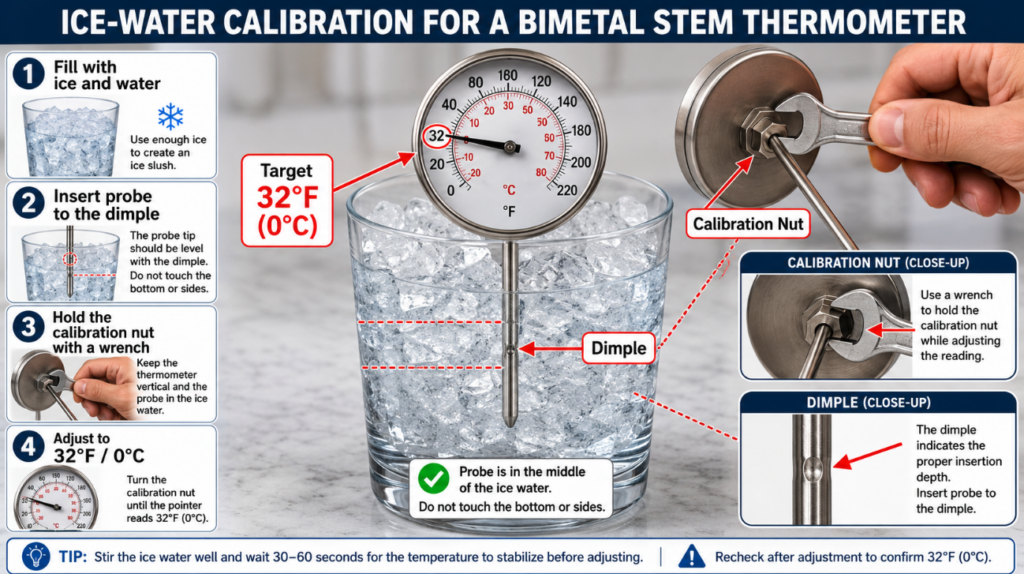
To achieve the rigorous accuracy required by ServSafe, you need to use mechanical techniques. The most standard process in the industry is the freezing point method:
- Prepare the ice water: Find a cup, fill it with crushed ice, and pour tap water until the rim of the cup is flush.
- Not dented: Insert a bimetallic rod thermometer into ice water. A lot of newbies will overlook this ——you have to make sure the entire “temperature zone” is completely submerged in water. The temperature sensing zone extends from the very tip of the probe to the location of the small indentation on the rod.
- Adjust with a wrench: Wait patiently for the pointer to stop completely. If the dial reading is not exactly 32 °F, take a wrench or pliers and jam the calibration nut just below the dial. Turn the head of the thermometer until the needle is perfectly aligned at 32°F.
The Ultimate Goal: Food Safety And Staying Out Of Danger Zones
Why are health inspectors staring at these calibration nodes? Implementing these hard and fast rules is actually about maintaining three bottom lines that are not negotiable:
- Prevent cross-contamination: Only when the temperature reading is accurate can you be sure that the food is heated high enough to kill bacteria that may have cross-contaminated your work surface.
- Eliminate hunger-causing diseases: Deadly pathogens like Salmonella and E. coli can survive even a few degrees of food failure. Precise calibration is your first line of defense against foodborne illness outbreaks.
- Stay out of the temperature danger zone: The FDA clearly states that 41°F to 135°F is the temperature danger zone, and bacteria will grow wildly in this range. Only a thermometer in perfect calibration can pat your chest and ensure your refrigeration and insulation equipment is safely out of this deadly temperature zone.
Upgrade Your Equipment And Don’t Let Broken Iron Hold You Back
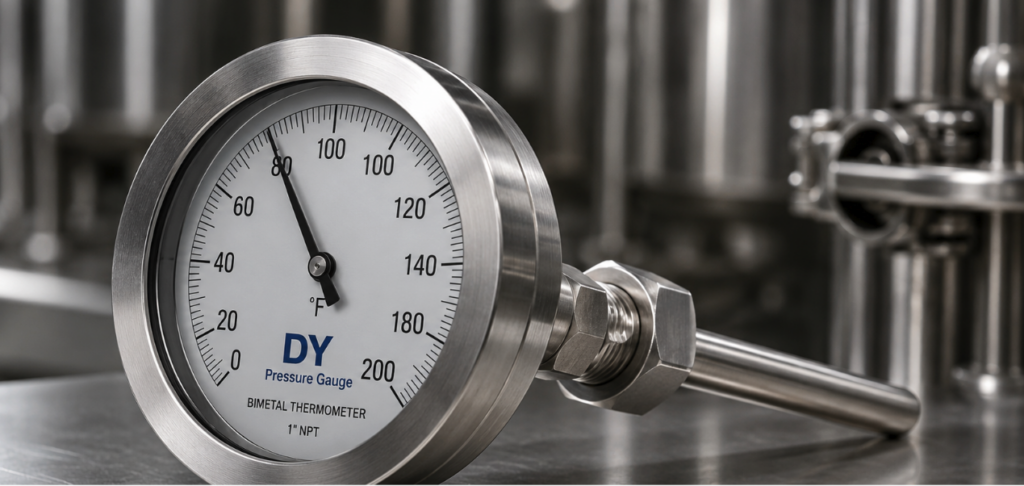
That being said, while calibration before every shift change and after a fall is ServSafe’s dead rule, if the thermometer you have keeps falling off the chain and can’t maintain an accuracy of +/- 2°F, then it’s a huge compliance hazard in itself. Drifting readings at every turn usually means you’re using a thermometer that’s made of poor, fragile material.
For commercial kitchen, food processing plant, and quality control managers who simply can’t afford equipment failure, simply switching to an industrial-grade thermometer is the best preventative measure.
I highly recommend keeping an eye on manufacturers like DY Pressure Gauge that specialize in heavy-duty, high-precision bimetallic thermometers and industrial measuring tools. Their equipment is designed to withstand the violent collisions and extreme temperature fluctuations in commercial environments. By replacing your factory or kitchen with hardcore equipment of the DY Pressure Gauge level, you can clearly feel the improvement in equipment stability. You no longer have to worry about calibration drift all day long. This also fundamentally ensures that your facility can pass the review of the FDA and various industry standards.
Author: David Reynolds
With over 15 years of on-the-ground experience navigating FDA audits and health inspections, I know exactly what it takes to keep a commercial kitchen or processing plant 100% compliant. My mission is to help QC managers and food service professionals implement bulletproof equipment SOPs—so you can pass your exams, avoid costly fines, and eliminate foodborne illness risks from your facility.