 Dypressuregauge

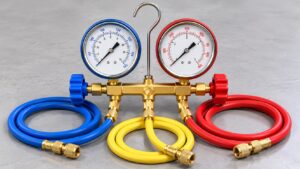
A Manifold Pressure Gauge Is Designed To Do What?
48Learn What A Manifold Pressure Gauge Is Designed To Measure And How To Check Low- And High-Side Readings Safely.
View details
Learn What A Manifold Pressure Gauge Is Designed To Measure And How To Check Low- And High-Side Readings Safely.
View details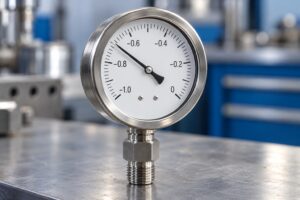
Learn Why A Vacuum Gauge Is Used To Measure Negative Pressure, How To Read Its Scale, And When To Choose Another Gauge.
View details
Seeing the writing of 3 4 pressure gauge, the direction is actually not difficult to judge. It says three-quarters of an inch, which is 3/4 inch. What’s really prone to error is that a pressure gauge can have two dimensions simultaneously: t...
View details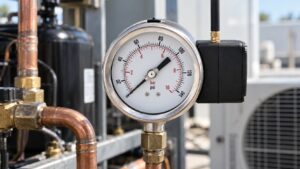
When many people first see the string of numbers “15-120-15” on the pressure gauge case or outer packaging, their subconscious reaction is: Is this a range? For example, measure vacuum on the left and positive pressure on the right? To be honest,...
View details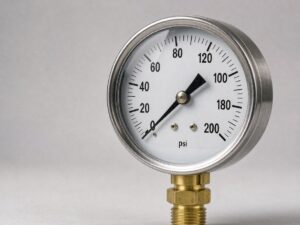
The 200 psi printed on a dial refers to the gauge's full-scale value — that is, the upper limit of pressure it can display, with the range starting from 0 at the lower end. psi is short for pound-force per square inch, a pressure unit common in N...
View details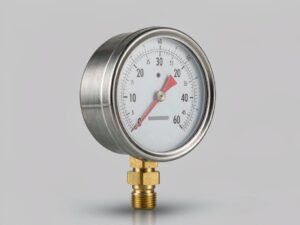
A meter labeled 0 60 psi pressure gauge reads gauge pressure, with a range from zero all the way to 60 psi. Zero is the lower limit, and 60 psi is the upper limit. These two numbers describe the span of the dial scale and are neither equal to the ...
View details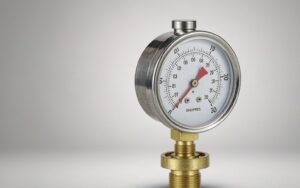
Most of the people who checked the English string “0 30 psi pressure gauge 1 4 npt” had a device in imperial units and were in a hurry to find a mechanical watch with a range between 0 and 30 psi and a 1/4 NPT interface to replace it. The princip...
View details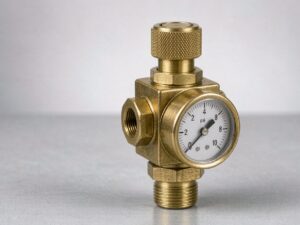
psi is short for pounds per square inch, an imperial pressure unit. One psi is roughly 6.895 kilopascals, or 0.06895 bar, so 10 psi converts to about 68.95 kPa. The 0 to 10 psi printed on a gauge dial means the range runs from a lower limit of 0 ...
View details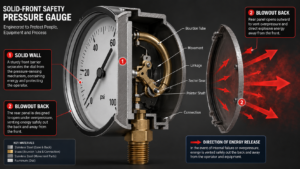
Compare Different Pressure Gauges To Maximize Safety. Use The S.A.F.E. Framework To Prevent Fatal Plant Blowouts.
View details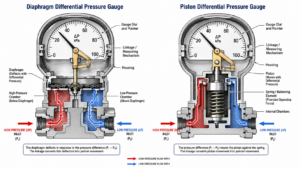
Differential Pressure Gauge Working Principle Explained. Master Internal Piston And Diaphragm Mechanics.
View details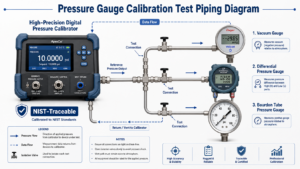
Master How To Calibrate Vacuum, Differential & Bourdon Gauges Using The Expert Z-S-L Metrology Guide.
View details
Master How To Calculate Gauge Pressure In A Pipe And Manometer Fast Using The D-H-C Framework For Field Engineers.
View details
Difference Between Atmospheric And Gauge Pressure. Use The Z.E.N. Framework To Avoid Fatal Hvac Weather Traps.
View details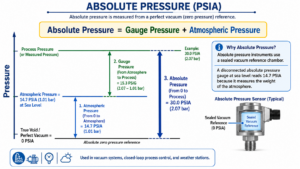
Difference Between Absolute And Gauge Pressure Explained. Use The Z.E.R.O. Matrix To Avoid Fatal Altitude Blowouts.
View details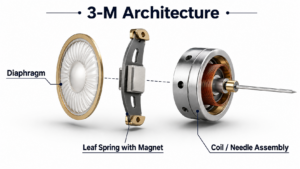
Expert Guide: Discover How Differential, Magnehelic, Photohelic, And Manifold Pressure Gauges Truly Work.
View detailsCan Gauge Pressure Be Zero? Yes. Learn How Atmospheric Pressure Affects Readings And Prevent Calibration Errors.
View details