 Dypressuregauge
Can An Air Pressure Gauge Be Used For Oil
I’ll give you a straight word: absolutely not.
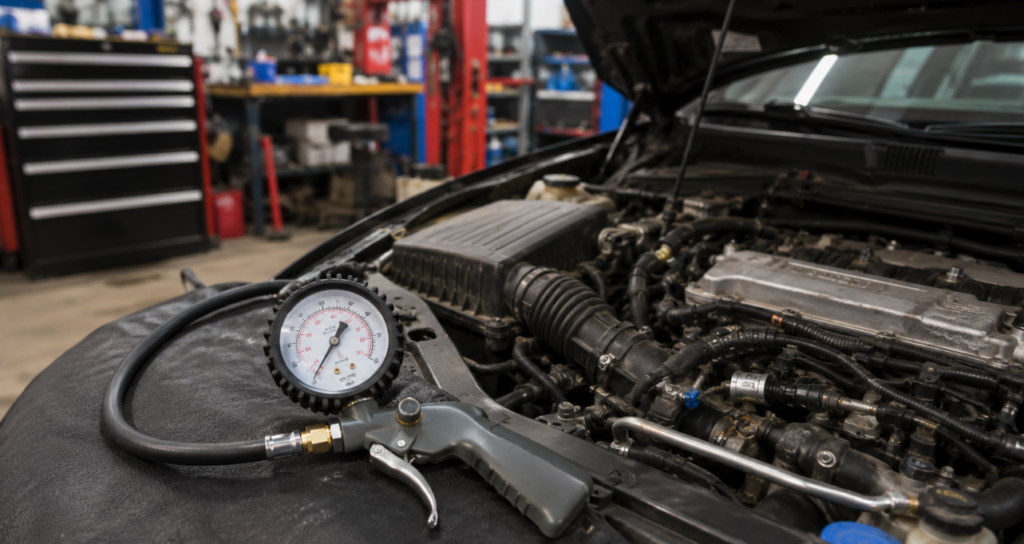
When you repair a car in a workshop or garage, you happen to have an ordinary pneumatic pressure gauge at hand. You may be thinking of saving trouble and connecting it to measure the oil pressure. Take my advice, don’t do it. The barometer is not designed to cope with the high viscosity and complex chemical composition of oil or hydraulic oil. Oil will quickly corrode the seals and rubber O-rings inside the barometer, and oil leakage will happen sooner or later.
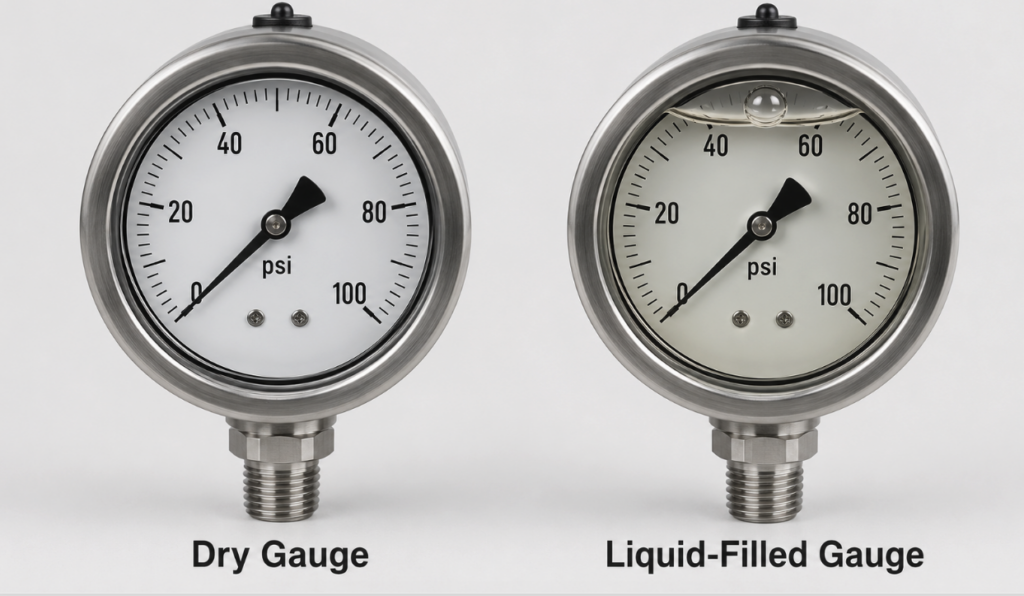
Not only that, most barometer is a “dry gauge”, that is, they are not filled with glycerin or other damping fluid. When the oil pump is working, the severe pressure pulse and impact cannot be carried by the dry gauge. If you really want to connect the barometer to the oil system, you will only get invalid data that jump randomly, completely scrapped instruments, and even face the serious danger of hot oil exploding in the workplace.
Why is it that mixing air tools with hydraulic/oil systems tends to a disaster? Also, what exactly should you use?
Fatal Effects Of Viscosity And Chemical Composition
The most fundamental reason why it cannot be mixed is that this watch was built to measure what medium. Air is a thin, compressible gas. What about motor oil and hydraulic oil? They are viscous, heavy, and incompressible liquids.
Ordinary air pressure meters use the most basic materials and can seal the air. Once you put the complex chemical composition of oil or hydraulic oil into this environment, the damage occurs instantly. Engine oil is full of various chemicals and petroleum-based additives, which are extremely corrosive to ordinary rubber. Once the oil enters the body, the internal sealing ring and rubber O-ring will quickly dissolve and become soft. Once these key seals are finished, the internal defense line of the instrument will collapse and the oil will leak directly by-pass. The watch will be completely useless from inside to outside.
“Dry Meter” And Pressure Pulse Hard
Just now we mentioned another key point, which is the mechanical design of the dial itself. The standard barometer you usually see is basically a “dry gauge” with only air in the glass cover of the dial. If you inflate the tires or measure the pressure of the air compressor, there is nothing wrong with it, because the air pressure is relatively stable and the gas itself can cushion it.
But the movement of the oil pump is completely different. It gives the oil not a smooth flow, but a violent impact with a strong sense of rhythm. This creates severe pressure spikes and pulses. The dry barometer lacks liquid like glycerin for shock absorption and buffering. As a result, the fragile Bourdon tube and precision gears inside can only solidly carry every critical strike of the oil pump. You can see the pointer jumping like crazy at the scene, shaking so much that you can’t read any value at all, and the gears inside have to be “swept” and polished after a few times.
Consequences Of Forced Use: From Data Misalignment To Serious Accidents
If it is hard, connect the pneumatic meter to the oil system, what will happen? I have seen too many rollover scene, the result is light make you crazy, heavy is extremely dangerous:
- The data is extremely inaccurate: dry meters can’t handle liquid pulses, and you can’t get a stable reference reading at all. It is better to have no data at all to judge engine failure with false data from high to low.
- The instrument is directly scrapped: on one side, the O-ring is chemically corroded, and on the other side, the gear is mechanically destroyed by pressure spikes. It won’t take a few minutes for the watch to go on permanent strike.
- Serious explosive risk: this is the most deadly hidden danger. When the seal fails and the internal pipe breaks under the high pressure without buffer, the meter will directly explode. You can imagine the picture-hot oil erupting in your workshop. This will not only spray the engine compartment in a mess and make a mess of the venue, but it is also very likely to directly burn people seriously.
The Right Solution: Honestly Invest In A Dedicated Oil Pressure Gauge
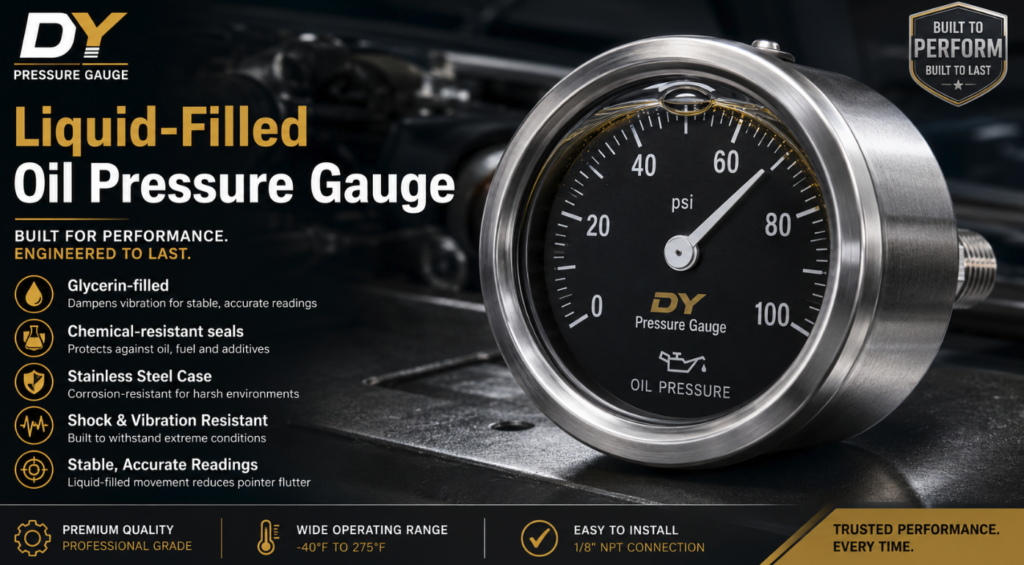
When dealing with oil under pressure, don’t dig on tools. For accurate readings and safe work, you must use a pressure gauge designed specifically for liquids. This kind of watch has chemical-resistant seals inside, and the dial is filled with liquid to deal with pulses.
In our line of work, whether it is a professional technician, an industrial repairman, or a DIY veteran who wants to do a good job, picking the right high-quality instrument is the first step. I usually recommend looking at brands like DY Pressure Gauge that specialize in making high-end pressure measurement instruments. Their things are designed to cope with such harsh conditions.
Change into a serious liquid-filled pressure gauge produced by DY Pressure Gauge, and you will have a bottom in your heart. Its internal parts are perfectly fine with harsh oils, and the glycerin inside perfectly absorbs those grumpy stress shocks. When the meter is connected, the pointer is as stable as an old dog, and the reading is extremely accurate, which reduces the risk of oil leakage in off the meter to zero. Stop gambling on your luck with a broken barometer, it’s the real business to match your workshop with truly professional and matching tools.
Author:Dave Miller
Throughout my career diagnosing complex engine and industrial machinery issues, I’ve seen firsthand the costly—and sometimes dangerous—disasters that happen when the wrong diagnostic tools are used. My mission here is to share practical, no-nonsense mechanical advice to help fellow technicians and DIYers work safer, smarter, and choose the right instruments for the job.