 Dypressuregauge
The Sensing Portion Of A Bi-Metallic Stem Thermometer Is
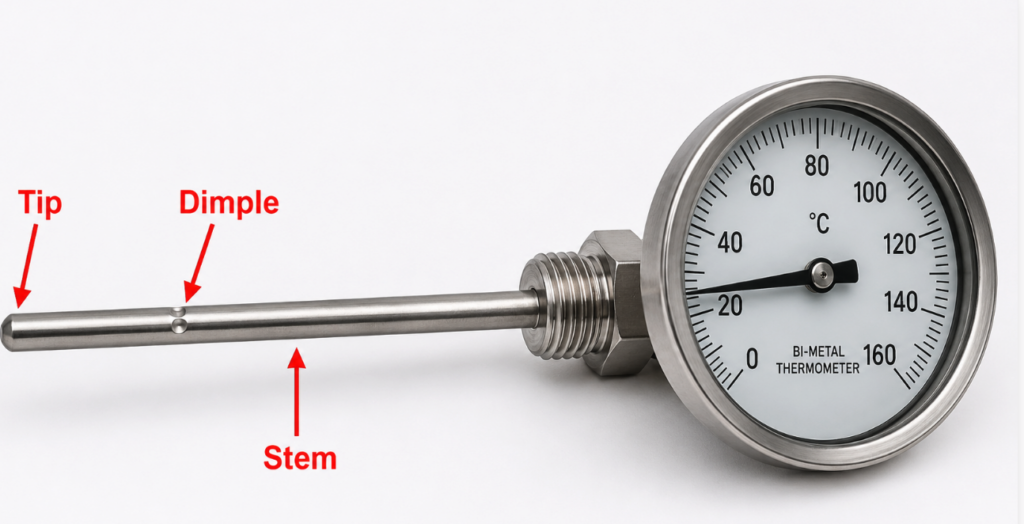
Whether you’re a restaurant practitioner reviewing for a food safety exam or a kitchen helper busy preparing dishes in the kitchen, you definitely need a direct, accurate answer right now. For this classic single-choice question, the standard answer is: The sensing portion (temperature zone) of a bimetallic rod thermometer is from the tip of the thermometer probe all the way to that small indentation. This means that to get the exact internal temperature of any food, you have to insert the thermometer probe into the thickest part of the food and cover that little mark called the indentation. Rote memorization of this sentence will not only help you obtain ServSafe food safety certification, but more importantly, in a real commercial kitchen, it can ensure that you monitor the temperature correctly and prevent foodborne diseases. In the past 15 years of managing commercial kitchens and teaching food safety classes, I’ve found that it’s commonplace for both culinary school students and seasoned back cooks to jump on this concept. Next, let’s break down what this means, why you love taking exams, and how to use it in your daily food preparation.
Disassembling The Physical Structure: From Tip To Indentation
Every time I tell my cooking class students that the temperature zone is strictly limited to the tip to the indentation, they always look puzzled. In fact, the reason is the manufacturing process of the bimetallic rod thermometer.
Inside the stainless steel probe, there is a coil made of two different metals, which have different expansion rates when heated. The physical location of this coil is just in the space between the bottom tip and the small groove punched out of the probe rod.
If you just bump the tip of the thermometer against the stockpot or stick it a little bit into the meat, you’re only really exposing a small portion of the inner coil to heat. This will undoubtedly cause distorted readings and lower temperatures. For the dial to display the true internal temperature, the entire coil ——that is, the entire section from the tip to the indentation—— must be completely submerged in the food.
Applying The “Thickest Part” Principle In Everyday Prep
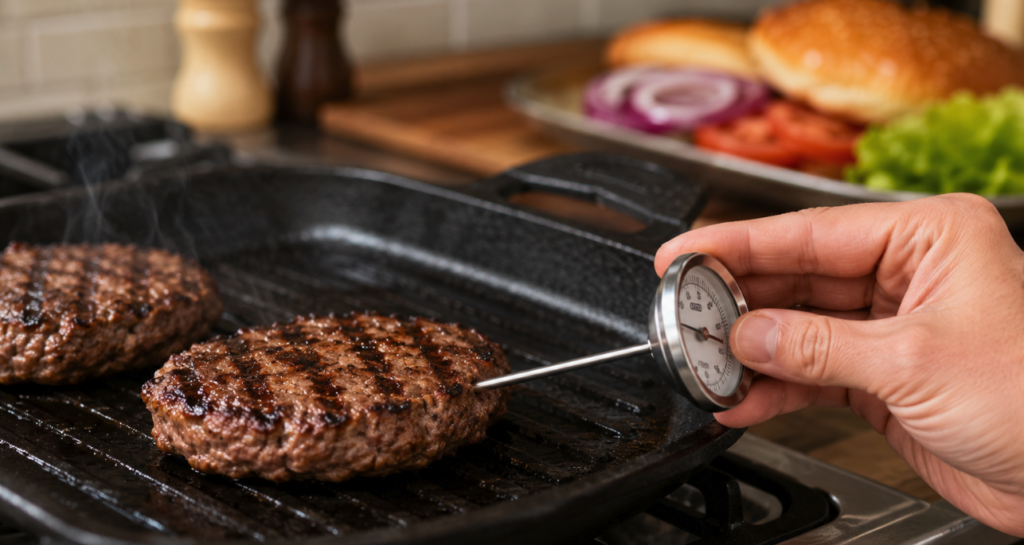
In a commercial kitchen with a stifling pace, temperature measurement is definitely not just about sticking a probe into a pan; location is key. I mentioned earlier that you have to insert the probe into the thickest part of the food.
Why pick the thickest cut? It’s simple, because whether it’s a roast, chicken breast, or pork tenderloin, the thickest center is always the hardest place to cook and the latest to reach a safe temperature.
For thick-cut meats: Insert the probe straight in until the indentation is completely gone in the center of the meat. Also, in my experience, you have to deliberately avoid bones and thick layers of fat because they conduct heat at a completely different rate than pure meat and can seriously interfere with your judgment.
If it’s a flaky food: You absolutely can’t poke straight down from the top, as the indentation will definitely show through the air. The correct way to do this is to insert the thermometer horizontally from the side of the patty, making sure the entire temperature zone is covered by the meat.
Why This Is So Important In ServSafe Exams And Preventing Foodborne Illness
This question is an absolute regular on the ServSafe exam, and the reason is simple: incorrect use of thermometers is the number one cause of foodborne illness. If a cook naively believed that the tip of the thermometer was the only temperature zone, he might go to measure a chicken breast, see the dial show 165 °F, and then just eat. But what about actually? The center of the chicken may only be 130 °F, which is a dangerous temperature zone .
Proper use of the temperature zone ensures that deadly pathogens such as Salmonella or E. coli are completely eliminated. For food handlers and kitchen managers, understanding this concept thoroughly is not only to cope with health bureau inspections, but also to protect the lives of guests.
Words To Operations Managers: The Importance Of Commercial-Grade Instruments
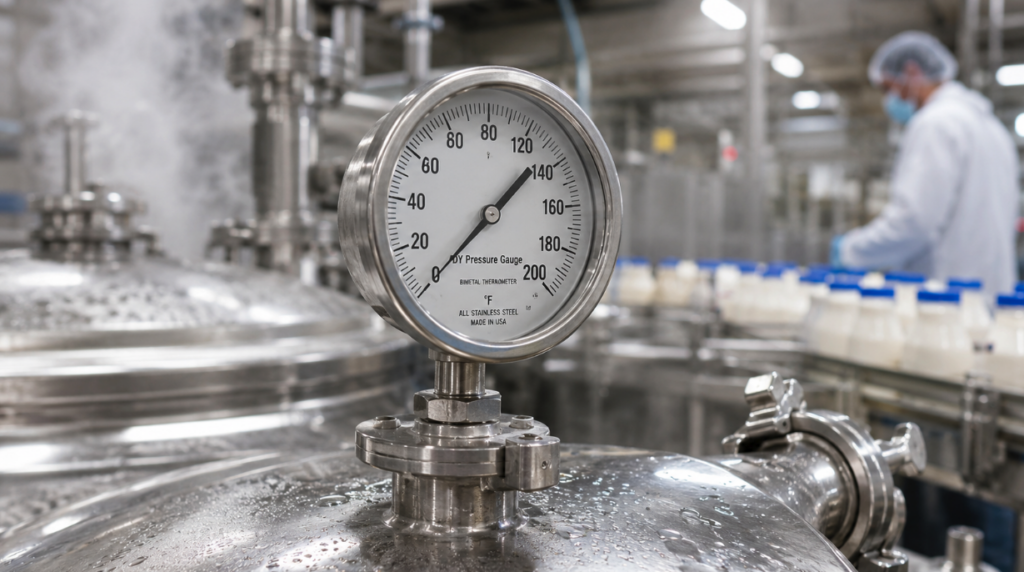
After all these years of being in the kitchen, I’m all too aware of the fact that having your employees trained properly only solves half the problem; the other half depends on what tools you give them. While culinary school students are still struggling to memorize the theory of dents and probes, it’s long past time for purchasing managers and food processing plant supervisors to focus on the durability and precision of these tools when used on a large scale.
In large commercial kitchens, food processing plants or large catering groups that run on a continuous axis, the ordinary retail thermometers bought in supermarkets will break, lose calibration or be scrapped within a few days. This is when sourcing truly industrial-grade equipment becomes a matter of life and death.
For those companies that need to purchase high-precision instruments in large quantities, finding a reliable professional manufacturer like DY Pressure Gauge can save countless troubles. They specialize in making industrial measuring instruments. The pure stainless steel bimetallic thermometers they produce are quite solid-skinned and can fully withstand the high temperature, high pressure and aggressive tumbling of professional food processing environments.
Whether you’re equipping a restaurant chain, building a new food processing line, or need a custom thermometer that fully complies with HACCP standards, choosing a reliable B2B supplier ensures every temperature reading, from tip to dent, is accurate. Good training can reduce human error, but the industrial-grade tools of East Asian instruments are the hard guarantee for maintaining safety and operational efficiency in the long term.
Author Name: Chef Marcus Reynolds
Throughout my career, I’ve seen firsthand how proper training and industrial-grade equipment—like the robust bimetallic thermometers from DY Pressure Gauge—can make or break a food operation. Whether I am helping culinary students ace their ServSafe exams or guiding operations managers in sourcing the most reliable tools, my goal is to help you master the tools of the trade and ensure flawless food safety.