 Dongyayibiao
Can I Use Air Pressure Gauge For Water
11Thinking Of Using An Air Pressure Gauge On Water Pipes? Learn Why This Leads To Failure, Corrosion, And Dangerous Water Hammer.
View detailsIt starts with a pressure sensor combined with a flexible diaphragm. When the process medium exerts pressure, the diaphragm will produce microscopic physical deformation, which in turn will change the resistance in the sensor circuit. This extremely small analog voltage change is sent to the signal conditioning unit for amplification and filtering, and then processed by the analog-to-digital converter. Finally, the microprocessor calculates the accurate value according to the factory calibration data and temperature compensation, and displays it on the LCD or LED screen. This digital output can not only freely switch units such as PSI, Bar or kPa, it completely solves the common parallax error of traditional mechanical watches.
The entire measurement process starts from the physical interface where the instrument contacts the medium. The flexible diaphragm is usually stainless steel or special alloy material, which is the most important sensing element. Piezoresistive sensors or strain gauges are attached to the back of the diaphragm. When hydraulic or pneumatic pressure comes on top, the diaphragm will produce physical deformation at the microscopic level. This kind of deformation is completely invisible under the naked eye, unlike the gear transmission in the mechanical watch. This structural change at the molecular level directly changes the internal resistance of the material, and this resistance change is completely proportional to the pressure, which is the underlying simulation data of all measurements.
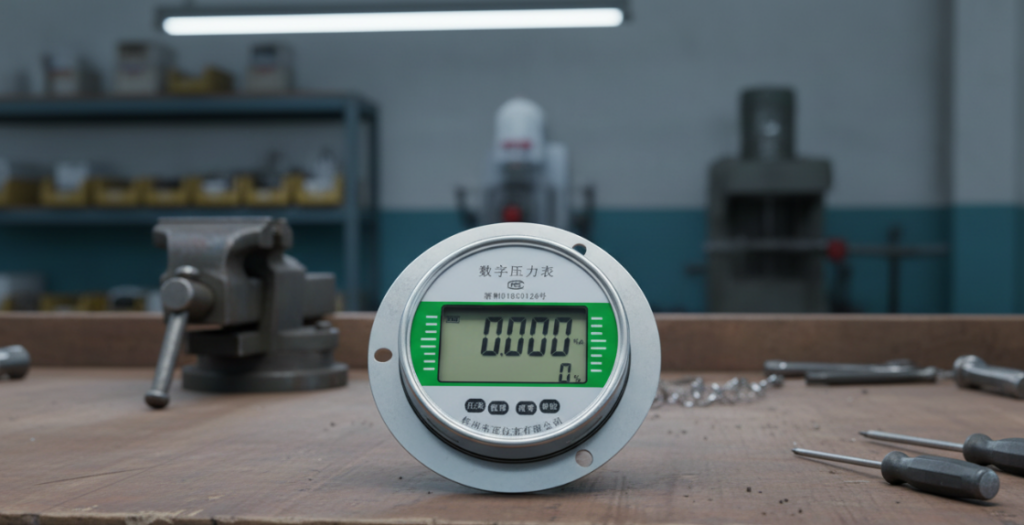
The analog voltage generated by the resistance change just mentioned is extremely weak, usually only on the order of millivolts. This original signal cannot be read directly. It must pass through the signal conditioning unit. At this stage, the signal will undergo two key actions: One is amplification, pulling the weak voltage to the level that the electronic components can handle; the other one is filtering, killing environmental electromagnetic interference or noise generated by industrial equipment. If this step is not done well, the readings you see will certainly jump non-stop.
After the signal is clean and strong enough, it has to be “translated” into a language that the electronic device can understand. This is the ADC’s job. It “samples” a continuous analog voltage at high frequency and converts it into a discrete digital signal. The resolution of the digital meter depends to a large extent on the number of bits in the ADC. High-quality ADCs capture the smallest jitter in the diaphragm, which is a prerequisite for high-precision testing and lab-grade readings.
It is not as rigid as a mechanical pointer, but performs real-time logical operations. It receives the original digital signal from the ADC and applies the factory calibration data to ensure that the instrument can maintain linearity and accuracy within the full range. The microprocessor handles temperature compensation. Metal materials have the characteristics of thermal expansion and contraction, which will interfere with the resistance value of the diaphragm, so the processor will correct the reading in real time according to the internal temperature.
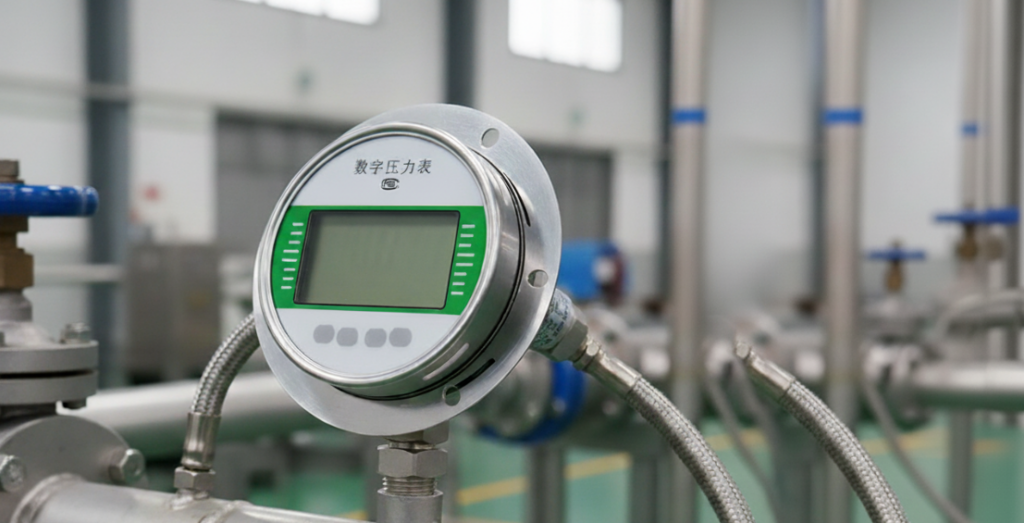
The final stage is visual output. The processed data is pushed to the LCD or LED screen. Because the data is fully digitized, you can switch units such as PSI, Bar or kPa at will, without having to check the dense dial or recalibrate it. For the operation and maintenance brothers, the biggest advantage of the digital table is that the reading is unique and unambiguous. It completely put an end to “parallax error”-that is, the previous problem that looking at the pointer from different angles would give different readings. In the current industrial application, this fast, reliable and highly repeatable measurement method is indeed unmatched by the old mechanical watch.
Author: Robert Henderson
I have designed and maintained thousands of pressure monitoring systems across various complex industrial environments. My expertise lies in bridge-circuit sensor technology and signal processing. I am passionate about translating intricate electromechanical principles into practical, actionable insights for field technicians and engineering students to ensure precision and safety in every measurement.”
Thinking Of Using An Air Pressure Gauge On Water Pipes? Learn Why This Leads To Failure, Corrosion, And Dangerous Water Hammer.
View details
Discover Why The Bourdon Tube Gauge Is The Industry Standard. An Expert Engineer Explains Its Reliability, Benefits, And How To Choose The Right One.
View details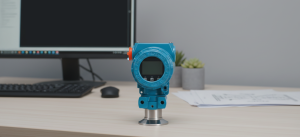
Learn How Differential Pressure Transmitters Work, From Sensor Mechanisms To Industrial Signal Conversion And Applications.
View details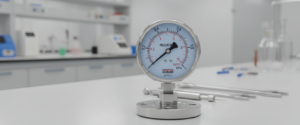
Learn How To Read Pressure Gauges Accurately. Master Units, Zeroing, And Safety To Prevent Dangerous Errors.
View details
HelloPlease log in