 Dongyayibiao
How Do Differential Pressure Transmitters Work
11Learn How Differential Pressure Transmitters Work, From Sensor Mechanisms To Industrial Signal Conversion And Applications.
View detailsPressure transmitters can be broadly classified into three categories based on their core functions.. The first is divided according to the measurement type, which determines your reference benchmark ; The second is to look at the sensor principle. You will mainly choose between piezoresistive , capacitive or strain gauge technology. The last is application design, for example, the flat membrane type for viscous medium, the sanitary type for food and pharmaceutical, or the input type for the level of the deep well.
Determining the reference point of the measurement is the first step in deciding which transmitter to buy in the factory.
Gauge pressure transmitter : This is the most common type in industrial sites, all over the street. It measures the pressure relative to the local atmospheric pressure. If you want to monitor the outlet pressure of the pump or the pressure of the ordinary storage tank, this is the most appropriate, because the atmospheric pressure is its baseline.
Absolute pressure transmitter : This is not the same as gauge pressure, it is based on absolute vacuum as a reference. In vacuum distillation and evaporation processes, which are extremely sensitive to air pressure fluctuations, I strongly recommend using absolute pressure, otherwise the weather will change and the air pressure will shake, and your measurement accuracy will be completely messed up.
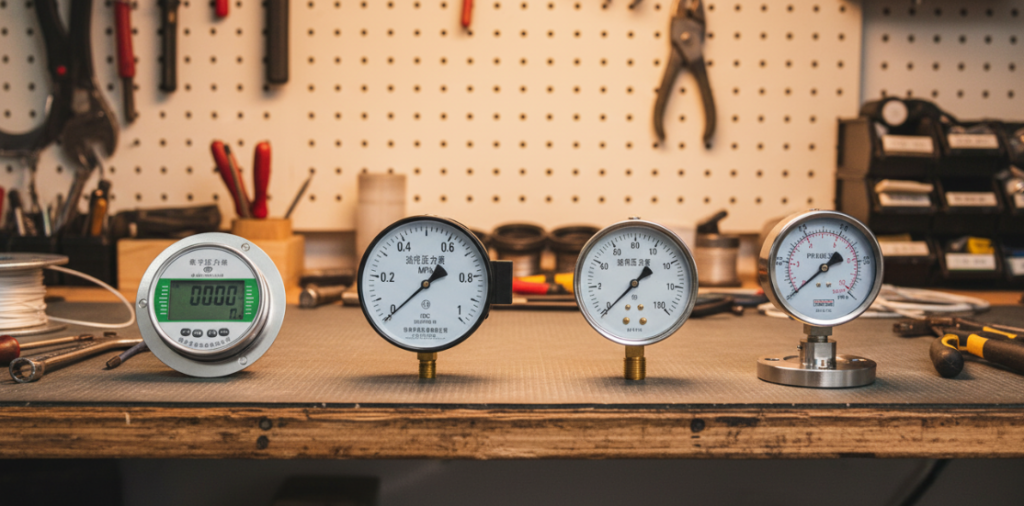
Differential pressure transmitter : This device has two pressure ports, which measure the difference between two points. It is an “all-round player”. We basically rely on it to measure the flow rate, monitor whether the filter screen is blocked, or measure the liquid level of the pressure vessel.
The “internal work” of the transmitter determines its performance limit, stability and how much you will eventually have to pay. According to technical requirements, you will encounter these three mainstream technologies:
Piezoresistive sensor: The use of silicon resistance changes to sense pressure. The sensitivity is very high, the key is cheap. For general industrial gas and liquid measurement, this gadget is the most cost-effective standard choice.
Capacitive sensing: Readings are made by sensing the change in capacitance between the diaphragm and the fixed capacitor plate. This transmitter is very famous in the circle, because they are extremely high accuracy, long-term stability is a mess, and the ability to withstand overpressure is very strong. In some critical control loops, I usually only recommend capacitive ones.
Strain gauge technology : The principle is that the deformation of the conductor leads to a change in resistance. This kind of transmitter is a typical “tough guy” and very resistant to operation. Although it is not necessarily the mainstream now, it is still irreplaceable in some heavy-duty applications with ultra-high pressure and extremely abnormal requirements for mechanical durability.
The field environment-that is, the medium you want to measure-directly determines what the transmitter shell looks like and what material it uses.
Flat film transmitter: If you are dealing with viscous, easy to crystallize or granular fluid, the standard pressure interface will be blocked in less than two days. The flat membrane design provides a smooth sensing surface, which can effectively prevent fouling and ensure that the system does not stop.
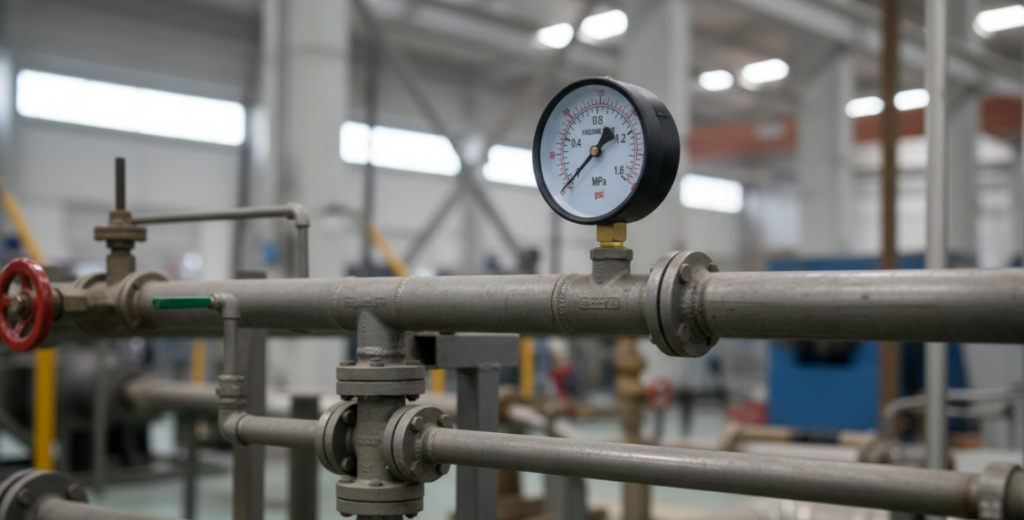
Hygienic pressure transmitters: Tailor-made for the food, beverage and pharmaceutical industries. The interface is usually a quick-fit clamp (Tri-clamps), the surface is polished like a mirror, and must meet strict hygiene and CIP standards.
Input type transmitter: Specially used to measure the liquid level of deep wells, reservoirs or open tanks. This design is to let you throw it directly into the liquid, using the principle of static pressure to calculate the height of the liquid level, simple and direct.
When you finally make a decision in each type of transmitter, you must align the technical parameters with your control architecture:
Output signal and communication: The current factory basically requires 4-20mA superimposed HART protocol, so that you can carry out remote adjustment and diagnosis in the central control room. If it is a purely digital environment, you may have to look at the FF bus or Profibus protocol.
Accuracy and temperature compensation: Don’t just look at room temperature accuracy when selecting. When the ambient temperature changes, the data will float. High-quality transmitters have built-in temperature compensation, even if the process temperature is high and low, but also to maintain accuracy.
Process connection and liquid receiving material: Whether the interface is NPT thread, flange or sanitary seal, it must be tightly sealed with your pipeline. In addition, the liquid receiving material must be able to withstand the corrosion of the medium, do not save money on this, otherwise the later maintenance will make you want to cry.
Author: Marcus Thorne
I’ve spent my career navigating the gap between complex sensor physics and practical project engineering. My goal is to help procurement teams and engineers skip the guesswork and choose the right pressure transmitter—from sensing principles to HART protocols—for their specific process needs.

Learn How Differential Pressure Transmitters Work, From Sensor Mechanisms To Industrial Signal Conversion And Applications.
View details
Learn Why Negative Gauge Pressure Occurs In Vacuum And HVAC Systems And How To Interpret Your Gauge Readings.
View details
Buy High-Precision Dual Needle Air Pressure Gauges From Imt Factory. Best Wholesale Prices For Air Brake Systems.
View details
Learn How Bourdon Tube Pressure Gauges Work, Troubleshoot Common Failures, And Discover Expert Maintenance Tips.
View details
HelloPlease log in