 Dypressuregauge
Shockproof Pressure Gauge
In high vibration environments such as heavy pumps, compressors or hydraulic systems, pointer jumping, internal mechanical wear and premature instrument failure are common chronic diseases.
To completely solve these problems, must select the model “high-quality shockproof pressure gauge”. You have to go with the liquid-filled type, and the housing has to be 304 or even 316L stainless steel.
The core logic of this type of instrument is to utilize the viscous damping effect of the filling fluid. A “shock-absorbing sleeve” is placed on the internal bourdon tube and movement sleeve to keep the hands stable even in strong fluctuations. In many of DY Pressure Gauge’s long-term projects, you must give priority to a fully sealed design to prevent oil leaks. If you use polycarbonate (PC) for windows, it will be impact-resistant enough. Also, thread standards such as NPT, G or BSP must fit tightly into the system, otherwise the fatigue damage caused by the pulse will give you a headache sooner or later.
The Underlying Logic Of Stability
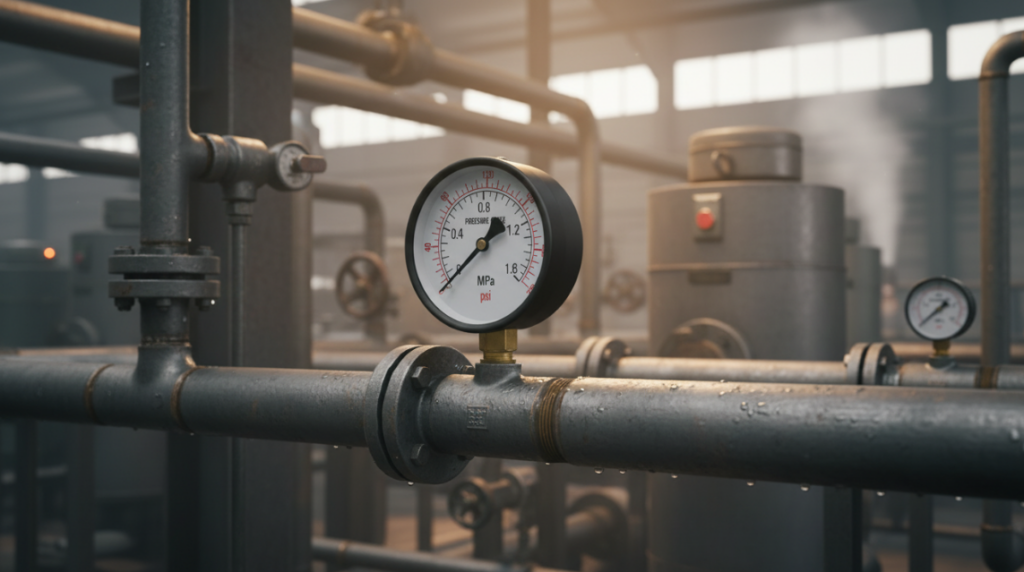
The biggest difference between a shockproof pressure gauge and an ordinary dry gauge is the internal damping system. Ordinary dry gauges are “consumables” in a vibrating environment. Mechanical vibration will cause high-frequency friction between the gear and the bourdon tube, which is called “pointer vibration”.
- Viscous damping: Fill the case with glycerin or silicone oil. This fluid adds resistance to the movement of the internal parts. Glycerin is most stable at room temperature, but if it’s a winter outdoors in the north, you’ll need to change the silicone oil or the needle will react slowly if the liquid thickens.
- Anti-wear protection: The liquid is not just for shock absorption, it also plays a lubricating role. It drastically reduces friction inside the movement mechanism, preventing the internal gears from being brought to life “ground flat” over time.
- In motion, in stillness: Only when the needle is steady can the on-site operator scan over the roaring hydraulic press or compressor at a glance to read the precise pressure value, rather than relying on guesswork.
Material Selection: 304 Or 316L?
For industrial grade applications, the choice of the material of the housing and the internal mechanism are equally important. In DY Pressure Gauge’s product standards, durability always comes first.
- 304 Stainless Steel: This is the “all-rounder” in the industry, corrosion resistance and structural strength are more than enough for most industrial scenarios.
- 316L Stainless Steel: If your equipment is on an offshore platform, in a chemical plant, or in an environment with frequent exposure to chloride corrosion, don’t save that money and go straight to 316L. It is much more resistant to pitting than the 304.
- Polycarbonate(PC) Window: Ordinary glass should not be used on industrial sites. PC windows are not only impact resistant, even if hit by gravel or falling tools, it will not shatter like glass, and the safety is more than one level higher.
Ensuring Long-Term Reliability
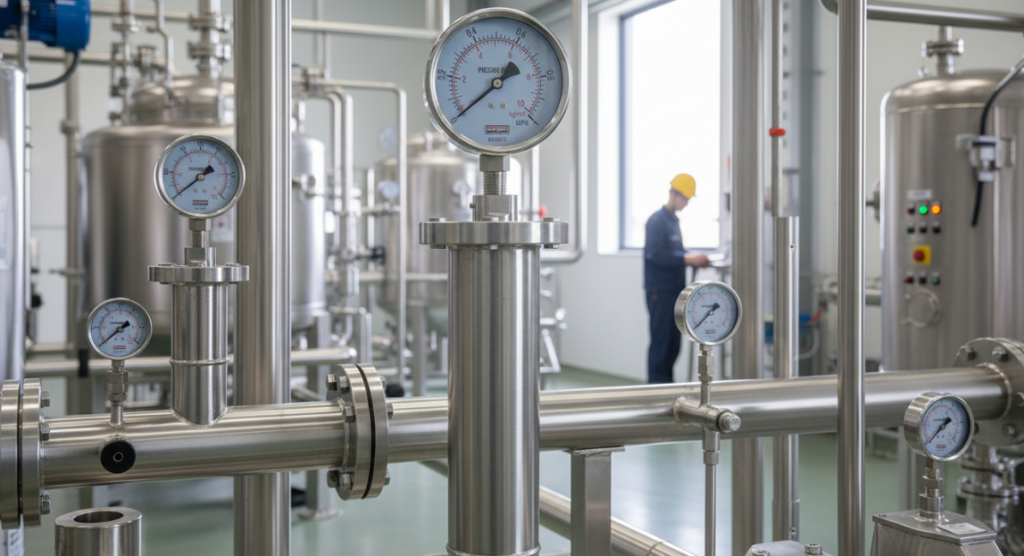
Whether a shock-resistant pressure gauge is good or not depends entirely on whether its seal is good or not. To circumvent this low-level error, high-quality models must be fully sealed:
- Integrated welding of case and joint: Don’t expect to rely on simple flange extrusion sealing. Laser welding can ensure that no matter how the temperature changes, the liquid inside will not come out.
- EPDM or Viton Seals: This high-performance rubber is essential for filling plugs and window eye seals. If you want to be exposed to chemical media, Viton (fluororubber) is the first choice.
Also, thread standards are matched for more than just “being able to screw on”. The NPT, G or BSP threads are selected to ensure that the connection point can withstand the fatigue stress caused by the system pulse. If you are dealing with a high frequency pulse system, the quality of the connection points directly determines the life of the entire table.
Application Areas And Ways To Extend Life
Replacing those ordinary dry gauges with dedicated earthquake-resistant models is a lifesaver for shock industries such as mining, oil gas and sewage treatment.
Eliminating fatigue damage caused by pulsation means less frequent replacements, shorter downtime maintenance times, and higher safety margins across the entire pressure monitoring system. Ultimately, isn’t the job of an instrument engineer to make the system run more steadily and for longer? Choosing the right shock-resistant meter can save you a lot of trouble on your maintenance bills later.
Author: Alex Chen
I am a senior instrumentation engineer with over 17 years of hands-on experience in industrial process control. Having spent countless hours on-site in demanding environments—ranging from oil refineries to offshore platforms—I have seen firsthand the critical role that reliable equipment plays in operational safety. My passion lies in simplifying complex engineering challenges.