 Dypressuregauge
Can An Air Pressure Gauge Be Used For Oil
No. This not only ruins the accuracy of the instrument and shortens the life of the equipment, but also, most seriously, lays a safety hazard.
Air pressure gauges are essentially designed for low-viscosity, compressible gases. Once you fill that thin, narrow pneumatic Bourdon tube with high-viscosity hydraulic or lubricating oil, the inside quickly clogs. You will find that the response of the meter becomes very “meaty”, that is, the reading lags, and in industrial environments with transient pressures, this delay in reading often causes you to miss the golden window to deal with dangerous pressures.
Why Are Viscosity And Compressibility “Hard Wounds”?
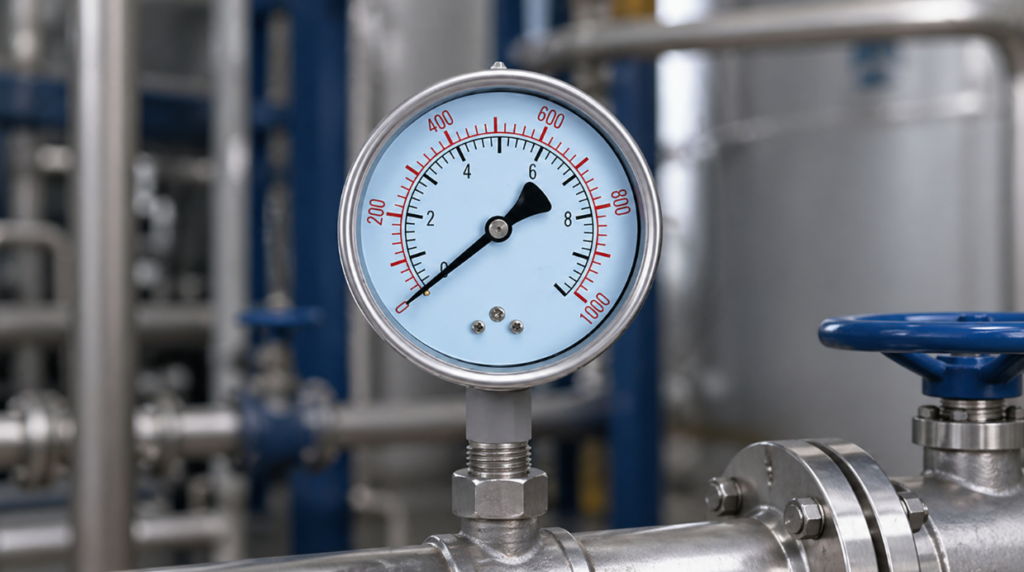
The engineering logic behind pneumatic and hydraulic systems is completely different. The object served by the gauge is a gas, which has almost no viscosity and is extremely compressible. But when you force a high-viscosity, incompressible liquid like oil into a table designed for air, the internal mechanisms simply can’t handle it.
- Internal blockage: Impurities or residues in industrial oil can directly seal the fine channels that are sensitive to the gauge.
- Slow reading reaction: The oil passes through tiny pores much slower than air. I have seen cases where the pressure has soared and the needle is still slowly rising, and this information gap is very fatal to technicians.
Chemical Compatibility
Besides physical structure, conflicts at the chemical level are more troublesome. The “dissipating part” of a regular gauge is usually made of brass or some specific polymer, which is fine in dry air but cannot withstand the “torture” of industrial oil.
Industrial oils today are not simple liquids, they are full of additives, detergents and anti-foaming agents. Once these chemicals hit the seal of the gauge:
- Sealing ring failure: O-rings originally designed for air will swell and crack rapidly.
- Zero drift: After the mechanism is corroded or covered with oil scale, the calibration is completely messed up. This “permanent drift” means that even if you remove the watch and wash it, it will no longer be accurate and will basically be scrapped.
The Hidden Dangers Of Cross-contamination
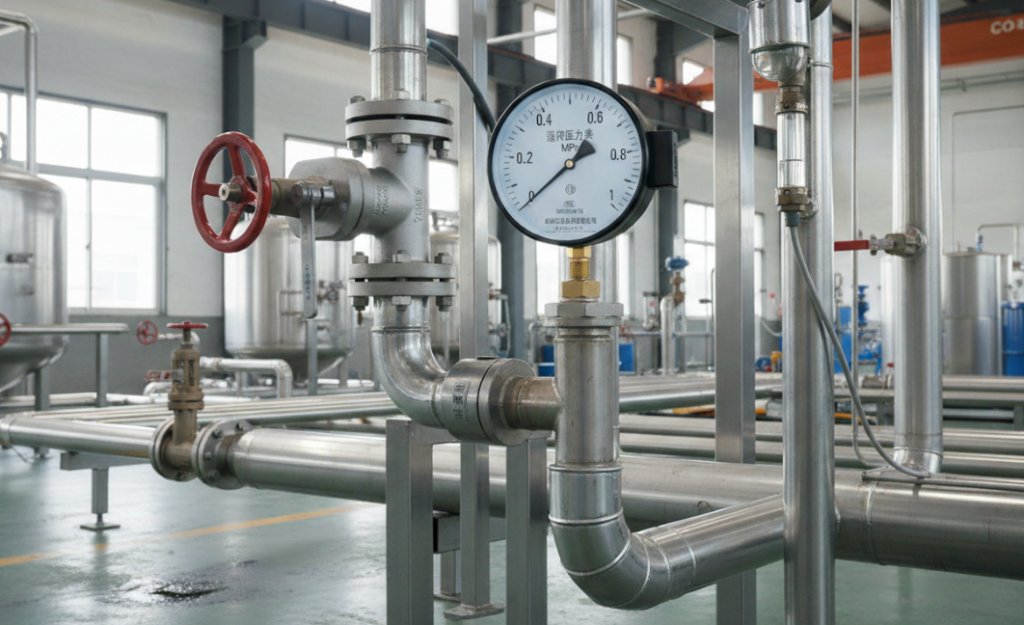
Cross-contamination is a real headache in actual maintenance work. If someone is greedy for convenience and puts the oil meter back into the pneumatic circuit, the remaining oil will flow down the pipeline into the pneumatic system.
In industries like food processing or electronics manufacturing, which place extremely high demands on air quality, this little oil stain can ruin an entire batch of product or render expensive precision solenoid valves useless. Once a meter is “wet” with oil, it is no longer a “dry” meter.
Why Must You Choose A Hydraulic Table?
In order to work steadily and avoid safety accidents, you must have a specialization in your skills. Throughout the years at DY Pressure Gauge, we have always recommended the use of industrial-grade, liquid-filled hydraulic gauges in oilline systems.
This type of dedicated meter has several advantages that gauges cannot compare to:
- Glycerin filling design: This filling can effectively absorb vibrations and also play a lubricating role. Even if the system pressure pulsates greatly, the pointer will not jump around randomly and the reading is very stable.
- Durable liquid-receiving material: usually stainless steel or special alloy, can withstand the chemical attack of industrial lubricating oil.
- High-pressure protection standards: They are designed with a higher upper limit and can withstand the instantaneous pressure peaks common in hydraulic systems.
To Summarize
Moving the gauge to the oil road for temporary use seems to save trouble, but the hidden costs of measurement inaccuracy, equipment damage and even system collapse far exceed that convenience. If you want your industrial monitoring to be both accurate and reliable, it’s better to honestly choose meters designed specifically for hydraulic media.
If you are looking for a hydraulic monitoring solution suitable for a specific industrial scenario, you can go to DY Pressure Gauge and we will recommend the safest option based on your actual working conditions.
Author: David Yang
“Hi, I’m a senior technical consultant. My expertise lies in diagnosing equipment failures and providing specialized hydraulic solutions that prioritize both precision and safety. I am passionate about sharing industry insights to help professionals avoid costly mistakes and ensure their operations run smoothly in even the most demanding environments.”
The prev: Digital Air Pressure Gauge For Air CompressorThe next: Shockproof Pressure Gauge