 Dypressuregauge

Texas Water Treatment Dosing Skid Project: YN-100ML Diaphragm Gauges
In spring 2025, a Texas integrator of water-treatment dosing skids asked Dongya Instrument to review the pressure gauges on a new coagulant-handling line. The skids were built for municipal and industrial treatment sites. A conventional gauge could show pressure during clean-water commissioning, but the customer’s maintenance team had a different experience after the chemical circuit went into service: residue collected around the small pressure inlet, readings became slow to respond, and removing a gauge for cleaning interrupted the skid’s routine checks.
The integrator needed a gauge that its technicians could read locally while keeping the process liquid out of the Bourdon-tube mechanism. It also had to standardize the connection and inspection documents across multiple skid builds. We treated this as a complete gauge-and-seal selection, not a simple swap from one dial to another.
Project at a glance
| Customer | Water-treatment dosing-skid integrator, Texas, USA |
|---|---|
| Application | Local pressure indication on a coagulant dosing line |
| Operating brief | 0.5–0.8 MPa during dosing, with short pump-discharge peaks below 1.1 MPa |
| Selected product | YN-100ML threaded diaphragm pressure gauge, 100 mm dial, 0–1.6 MPa range, class 1.6 |
| Process-side specification | Threaded connection; diaphragm, lower housing, gasket and seal fill reviewed together against the customer’s medium and temperature data |
| Supply | 24 pilot assemblies followed by a 600-piece first production order |
The problem was in the process connection
The customer sent photographs of the original installation and a sample of the maintenance record. The conventional gauges had small inlets that were difficult to inspect once the skid was assembled. On two pilot skids, the pointer began to respond slowly after repeated dosing and flushing cycles. The team initially asked for a “corrosion-proof pressure gauge,” but that description did not say enough about the failure. Deposits at the inlet, chemical compatibility and cleaning access all needed attention.
We asked for the coagulant’s supplier data sheet, concentration range, operating temperature, cleaning procedure and expected pressure peaks. We also requested the process-connection drawing and the space available for a wrench. The medium information mattered because the gauge’s external case material is not a substitute for checking the components exposed to the liquid. The diaphragm, lower housing, gasket and any seal fill had to be considered as one measuring system.
Why we proposed a diaphragm system
We proposed the YN-100ML threaded diaphragm pressure gauge as the starting point. Dongya’s product listing identifies a 100 mm dial, a 0–1.6 MPa range and class 1.6 for this model. In a diaphragm-seal assembly, the process pressure acts on the diaphragm and is transmitted through the sealed fill fluid to the gauge. That arrangement keeps the customer’s coagulant out of the ordinary gauge inlet and measuring element.
We did not offer a material choice from the product photograph. Instead, the customer’s medium data and cleaning conditions went onto an approval sheet for the process-contacting diaphragm, lower housing and gasket. The integrator’s engineers reviewed that material schedule with their chemical supplier before signing the drawing. The first drawing also showed the exact threaded connection and installed height so the assembly would fit beside the dosing-pump valves.
Our initial sample layout created a practical issue: the lower housing left too little room for a standard wrench at one valve position. The customer marked the interference on its skid drawing. We changed the connection arrangement in the approved assembly drawing and sent a revised sample before releasing the pilot quantity. That revision prevented the field installer from tightening the gauge by turning the dial case, which could disturb the sealed assembly.
The pilot: checking the whole assembly, not just the dial
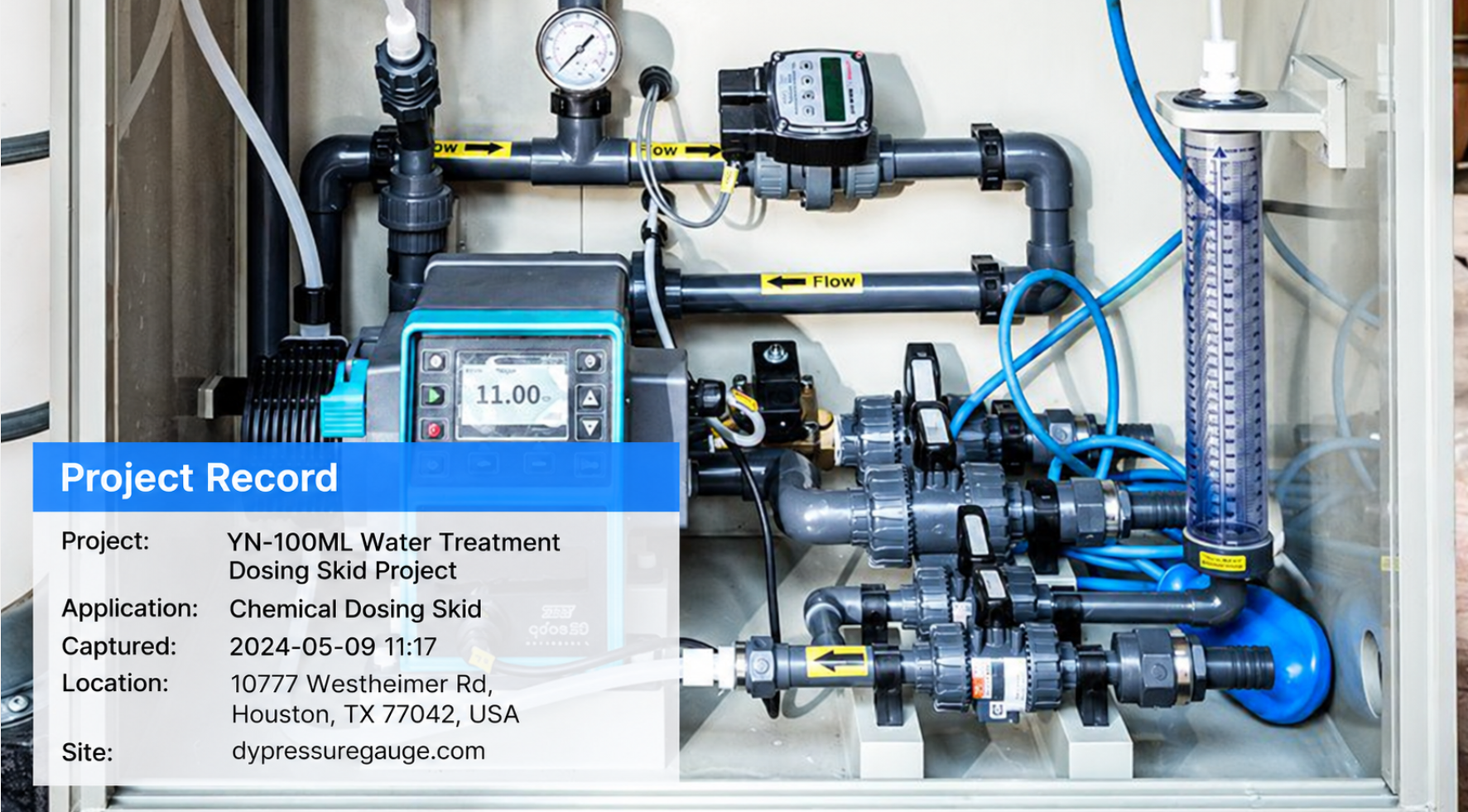
The integrator installed 24 pilot assemblies across three skid layouts. Its acceptance check covered the threaded fit, clearance for installation, readable pressure indication during dosing, zero position after isolation and depressurization, and visible leakage at the process connection. The team also recorded the gauge response after several normal flushing cycles. Because a diaphragm seal is a filled, closed system, the pilot assemblies were handled and checked as complete units rather than separating the gauge from the seal for cleaning.
Over the eight-week pilot, the gauges remained readable at the specified measuring points and the maintenance team did not report the inlet blockage that had affected the previous direct-connected gauges. This observation supported the purchase decision for the pilot conditions; it did not establish an unlimited service life or prove suitability for every coagulant formulation. The approved material schedule and the customer’s cleaning procedure stayed attached to the order.
From approval to a repeatable production order
After the pilot, the integrator placed a 600-piece opening order for its next skid builds. The purchase order referenced the approved assembly drawing, range, dial size, connection, process-contacting materials, packaging method and required documents. We confirmed those details before production so the batch could be inspected against the same configuration the customer had installed during the trial.
Our pressure-gauge quality process includes incoming-part checks, assembly inspection, finished appearance and zero-position checks, indication checks on rising and falling pressure, sealing checks and record retention. For this order, the integrator requested a batch-linked internal outgoing inspection record. We described it accurately as a factory record; the customer had not specified a third-party certification program for this shipment. The diaphragm and gauge were checked and delivered as an assembled measuring system.
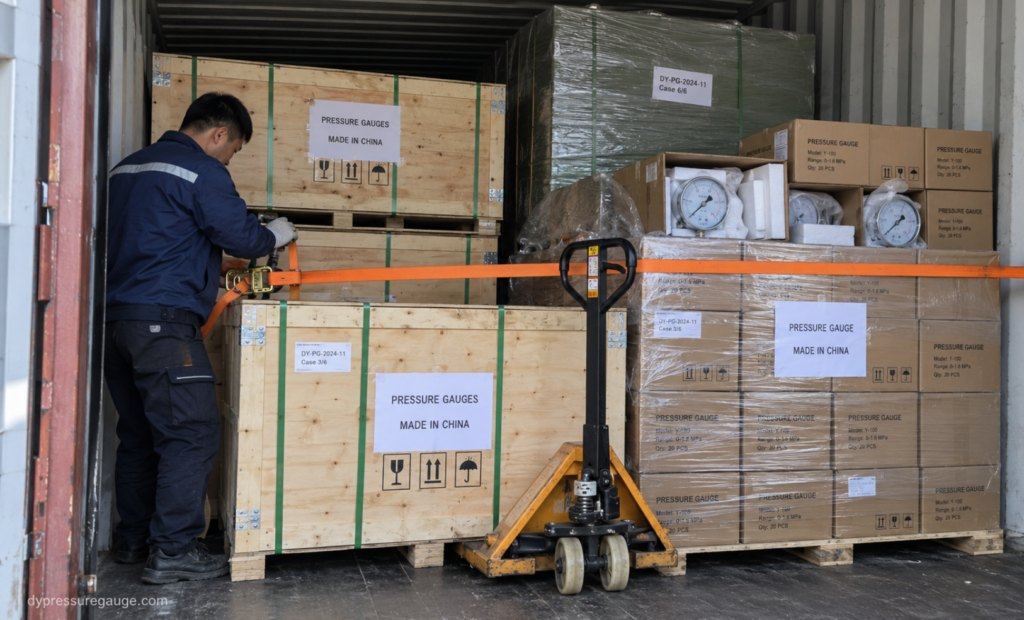
At receipt, the customer’s warehouse checked the model, range, connection drawing, material schedule, packaging label and documents before moving the gauges into skid production. That step mattered as much as the pilot reading. A distributor or integrator cannot reliably reorder a chemical-service instrument if “diaphragm gauge” is the only description on the purchase order.
What the customer gained
The integrator gained a defined diaphragm-gauge assembly for its covered dosing-skid layouts. Technicians could read pressure at the local point, and the process medium no longer entered the ordinary gauge inlet. The approved connection and material schedule gave purchasing and receiving teams a repeatable reference for future batches. The eight-week trial answered the customer’s immediate fit, readability and maintenance questions; continued inspection in service remained part of its normal operating program.
For other water-treatment and chemical buyers, the transferable lesson is to specify the medium and complete seal assembly before discussing price or order volume. A diaphragm gauge is selected around the actual chemical, concentration, temperature, pressure, connection and cleaning method. A material that works in one dosing line should not be assumed suitable for another.
Discuss a diaphragm-gauge order with Dongya
Send us your process medium and concentration, operating and maximum pressure, temperature range, connection drawing, installation space, cleaning procedure, annual quantity and document requirements. We can review the complete gauge-and-seal configuration before sampling or quoting a production order. Explore our diaphragm pressure gauge range or contact Dongya with your project brief.