 Dypressuregauge
Bi Metal Stem Thermometers Should Be Calibrated
Yes, bi metal stem thermometers absolutely require regular calibration.
In the harsh environment of food processing, these tables must bite down on accuracy at ±2°F, otherwise the risk of material deterioration or cross-contamination will get out of control. According to the factory’s SOP (Standard Operating Procedure), as long as the gauge has been dropped, bumped, or has just been tested for severe temperature differences, or even before the first use out of the box, it must be calibrated immediately. It must also be brought in during routine or weekly preventive maintenance. The operation the easiest to use in the workshop is actually the ice-point method. Insert the probe rod into the mixture of crushed ice and distilled water, making sure to cover the temperature zone, and then take a calibrated wrench to tighten the adjusting nut under the dial until the pointer is firmly pointed at 32 °F. This action can instantly correct accuracy drift and maintain compliance requirements of the production line.
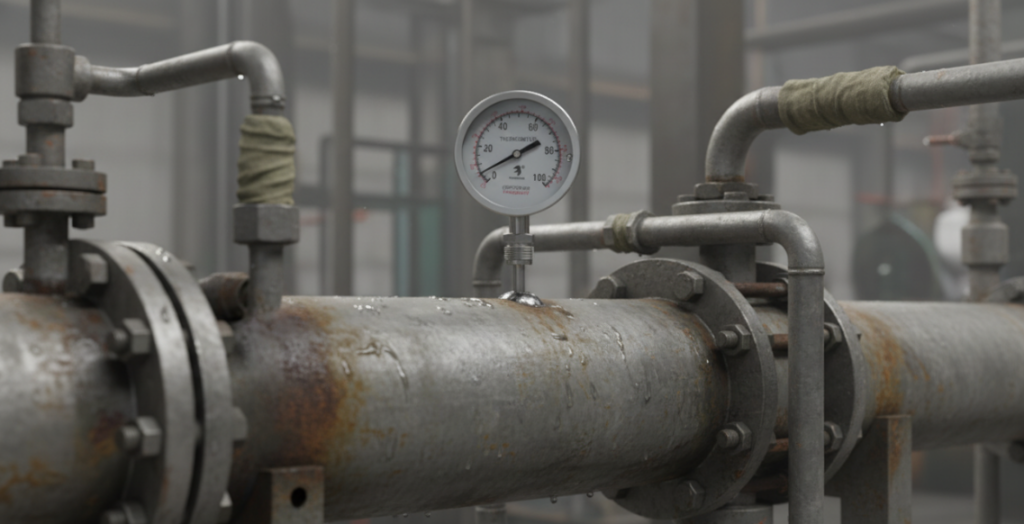
HACCP Compliance And ±2°F Accuracy
In industrial food processing, temperature control is never a reference suggestion. The underlying logic behind the calibration of bimetallic needle thermometers is, to maintain the ±2°F accuracy dead center specified in the HACCP standard.
Once the thermometer experiences even a few degrees of accuracy drift, the safety of the entire batch is actually suspended. Even though the actual product is already in the “dangerous temperature zone”, the table also shows “safety”, which directly leads to bacterial growth, food spoilage and extremely high cross-contamination risks. Doing a good calibration is actually to remove the thorn in QA’s eye and ensure that the data they see is the real physical condition of the production line.
When Calibration Must Be Triggered
To stabilize the production line, the QA department must write several hard trigger conditions directly into the SOP. From an instrument manufacturing perspective, don’t hesitate to calibrate immediately when these four situations arise:
- Before first use: Many people have a misconception that new tables work right out of the box. The vibration along the way of logistics and transportation can easily cause the needle to be tilted. Calibrate first and then go online to get a compliant baseline.
- After dropping or physical bump: The bimetallic temperature-sensitive coil inside is actually a very sensitive mechanical part. Even if the operator just accidentally drops it on the hard ground in the workshop, the mechanical impact force will almost certainly shake the original calibration state away.
- After measuring the extreme temperature difference: Just insert it into the freezer, turn around and measure the boiling water again. The bimetallic temperature coil expands and contracts violently under this thermal shock, which is very easy to pull out the accuracy drift. At this time, the school must be repeated immediately.
- During daily or weekly preventive maintenance: In high-volume food plants, mechanical wear of meters is constant. Schedule a daily or weekly inspection plan based on the production capacity of your production line to catch the accuracy drift before it destroys the product quality.
Practical Steps To Correcting Accuracy Drift
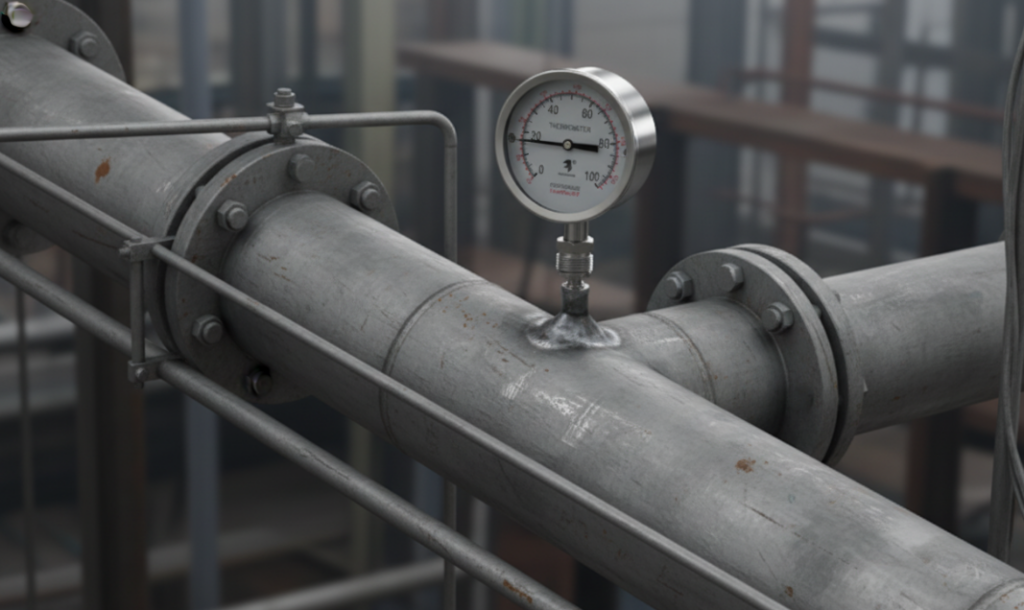
For food factory environments, the freezing point method is undoubtedly the most reliable and down-to-earth technical means. Follow these steps to immediately pull back the drift accuracy:
- To make the ice-water mixture: Find a suitable container, fill it with finely crushed ice, and add distilled water. Note, always use distilled water, impurities in tap water will change the freezing point. Stir well to make that thick ice-water slurry.
- To properly immerse: Insert a bimetallic probe rod into the center of the ice water. Here’s a key point——it has to be past the temperature zone. Look closely for that little dimple on the side of the probe rod, which is the top mark of the inner bimetallic roll. Make sure this groove is completely submerged in the water, but keep your hands steady so that the probe rod does not touch the bottom or wall of the container.
- Wait for stability: Don’t rush to adjust, give the dial hands a little time to find the right position, and wait about 30 seconds to 1 minute.
- Adjust to 32°F: If the pointer is not aligned with 32°F, the probe rod will remain in the water and do not move. Get a calibration wrench and snap onto the hexagonal adjusting nut just below the dial. Put a little force on your hand and twist slowly until the pointer is firmly aligned with the 32°F scale line.
Find The Right Professional Instrument Manufacturer
To fundamentally reduce the frequency of accuracy drift, the source still needs to buy a good pair of industrial-grade gauges. Solid structure, exquisite bimetallic coils, and strict manufacturing tolerances can directly help you save countless tedious adjustment tasks in the strict workshop.
Directly finding a source manufacturer who understands the industry is the easiest way to protect the production line. You can go to DY Presssure Gauge to see a high-quality temperature measurement solution that truly meets HACCP standards. The process foundation for making instruments for more than ten years is placed here. This set of things can definitely ensure the safety and compliance of your factory.
Author: Marcus Vance
Hi, I am a senior QA engineer and industrial instrumentation specialist with over 10 years of experience in food processing safety. Having spent countless hours on the factory floor, I know exactly what it takes to maintain strict HACCP compliance and optimize standard operating procedures (SOP). I am passionate about bridging the gap between rigorous safety standards and practical, down-to-earth technical solutions.