 Dypressuregauge
What Does A Pressure Transmitter Do
It is a core industrial measuring instrument responsible for physically detecting the pressure of a liquid, gas or vapor and then converting this mechanical force into a standard electrical signal. Unlike old-fashioned traditional mechanical pressure gauges, which can only be displayed on the dial “in situ”, the transmitter is an active worker that can transmit this electronic data all the way to remote control rooms, PLCs (programmable logic controllers) or DCSs (distributed control systems) far away. This allows our automation system to monitor and record in real time, and adjust process control parameters at any time. To summarize, it is actually the “nervous system” of the entire factory, which turns raw physical pressure into electronic data that can be directly executed, thereby ensuring the safety, automation and high precision of operations.
Physical Pressure Detection In Industrial Systems
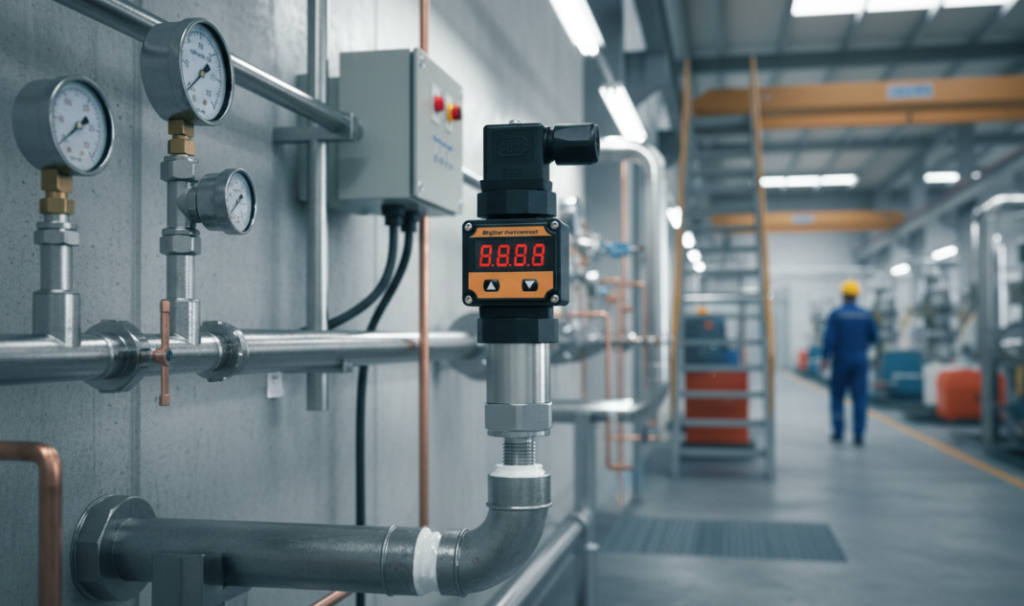
To figure out how pressure transmitters actually work, you first have to look at how they work with different industrial media. Whether your plant’s pipeline network is running flowing water, compressed gas or high-temperature steam, the transmitter is directly installed in your pipeline design or process equipment. Its first task is to feel the original physical forces generated by these liquids, gases or vapors hard and hard. Having an instrument to accurately and real-time grasp these physical changes is the lowest-level logic to maintain the stability of any industrial scenario system.
Convert Physical Forces Into Useful Electronic Data
However, can feel the pressure and only does half the job for the transmitter. The real value of this thing lies in its “translational” ability— to turn that physical force into a language that your system can understand: that is, to standardize electrical signals.
In most industrial automation configurations, the simulation volume is basically 4-20mA. After converting the raw physical pressure into executable electronic data, the transmitter ensures the standardization of the measurement. This specific electrical signal is extremely reliable and particularly resistant to interference from electrical noise, which ensures that the precise pressure state of your liquid, gas or steam is transmitted throughout the plant without any attenuation or error.
Pressure Transmitter Compare to Conventional Mechanical
A conventional mechanical pressure gauge is a great tool for basic field observations; but its limitations are too obvious, as it can only be displayed in place on the dial. If the operator hadn’t stood right in front of the gauge and stared, no one would have known the pressure in the tube even if it had been turned over for a day.
The pressure transmitter completely eliminated this pain point. Unlike mechanical gauges, transmitters can actively extend the data line and transmit it. It directly saves the trouble of having to go to the site manually to read the meter one by one, and can be regarded as truly connecting the workshop field equipment with the engineers who are sitting in the office to coordinate.
Connecting Remote Control Rooms
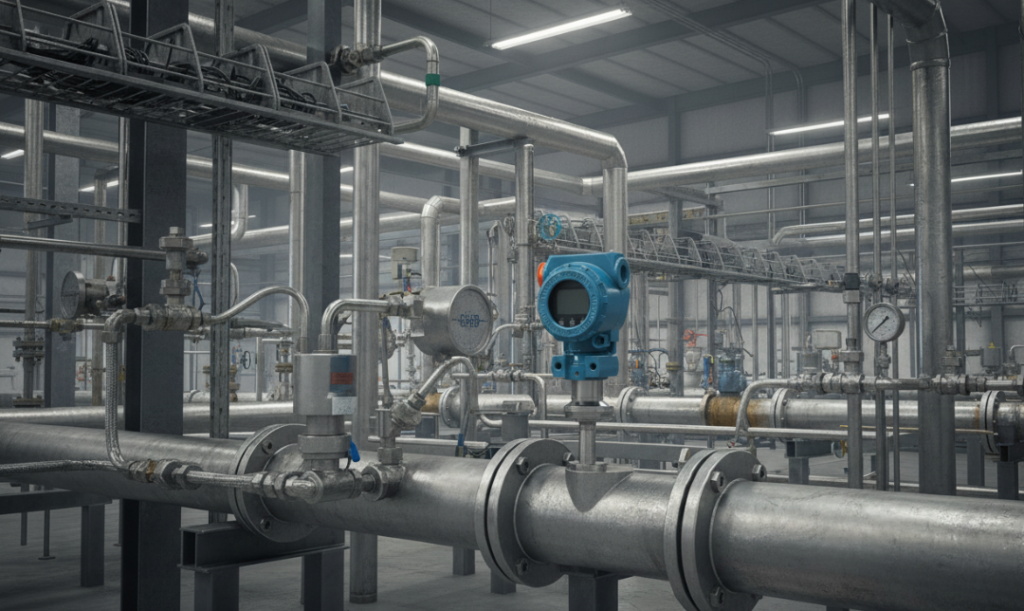
Going down the long distance transmission line, a pressure transmitter is essentially hooking your on-site pipelines and machines directly onto the network in the remote control room. Those 4-20mA signals are constantly being sent to the PLC or DCS.
Because the transmitter is constantly chatting “chatting” with these control centers, it deserves the title of factory “nervous system”. This is similar to the fact that the body’s nerve endings transmit pain and touch to the brain, and the transmitter feeds critical pressure data to the PLC or DCS. With this constant flow of information, your central system can “feel” what’s really going on in the tube belly at any millisecond, moment.
Ensure Safe, Automated And Precise Operation
Ultimately, the ultimate mission of a pressure transmitter is to achieve true process control. It is because the PLC or DCS continuously receives real-time data from the transmitter that your automated system can monitor, record, and fine-tune control parameters on its own without human intervention.
To give you the most practical example, if the pressure of a gas or steam pipe suddenly surges to the danger line, the system can automatically open the pressure relief valve or stop the pump directly after receiving the electronic data. This real-time intervention and regulation capability is the foundation for ensuring safety, automation and precision production in the entire factory area. It has replaced the guesswork “almost” of industrial processing with absolute precision and reliability.
Looking For A Reliable Pressure Measurement Solution?
Whether you plan to upgrade your factory to an automated “nervous system” with an advanced pressure transmitter, or simply need a high-precision traditional mechanical pressure gauge for on-site readings, choosing the right industrial measuring instrument is crucial to the success or failure of your project. If you need a high-quality pressure measurement solution tailored for your pipeline design and automation needs, you can visit DY Pressure Gauge directly, where you’ll find the right counter gauges for safe and precise operation.
Author: David Miller
Hi, I’m a senior automation engineer with over 19 years of hands-on experience in industrial measuring instruments. Throughout my career, I’ve spent countless hours on factory floors and in control rooms, helping clients transition from traditional mechanical gauges to advanced automated systems. Because people frequently ask me for advice on equipment selection, I love sharing my technical insights on how instruments like pressure transmitters integrate with PLC and DCS systems.