 Dypressuregauge
Explosion Proof Pressure Gauge
To choose an explosion-proof pressure gauge in a hazardous environment like Zone 1/2 or Class I Division 1/2, procurement engineers must work hard on four technical pillars: global safety certification, material compatibility, protection grade and operating accuracy. A high-quality explosion-proof watch is not just an ordinary watch with a thick shell. Its core lies in the design of that “explosion-proof shell”. It must be able to suppress the internal explosion sparks and absolutely cannot ignite the combustible gas or steam in the external environment. When encountering the highly vibrating working conditions of refineries or chemical plants, I always recommend directly filling with liquid type, otherwise the hands will jump around and the mechanical structure of the Bourdon tube will be quickly worn out. We have to keep an eye on the P&ID drawings for inspection. The threaded interface and the scale must be tightly closed.
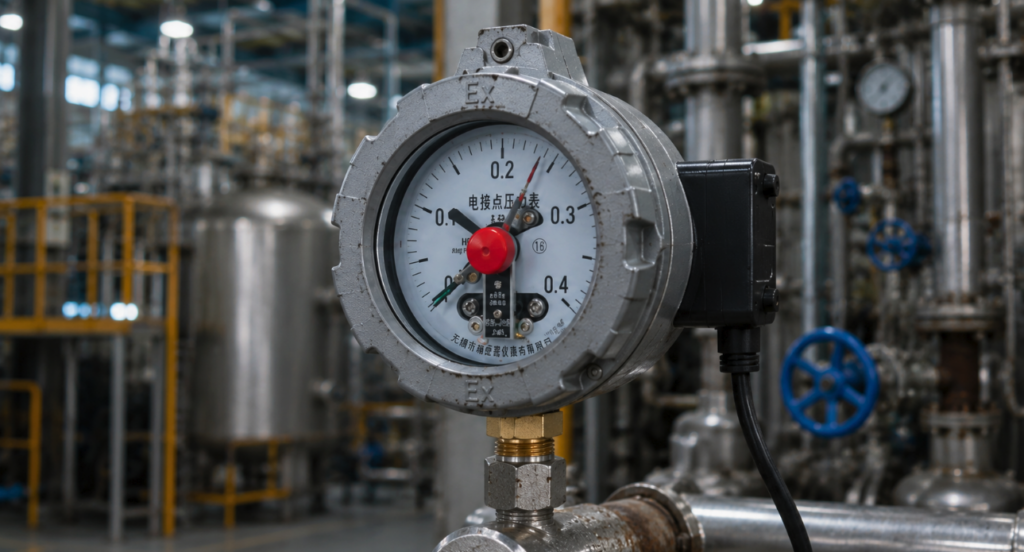
Global Safety Certification
ATEX and IECEx: If you are running a European or international project, these two are essential. They ensure that the equipment does not drop chains in the explosive gas and dust environment of Zone 1 or Zone 2.
UL/CSA: If you are running a North American project and are using the Class/Division system, then Class I, Division 1/2 certification must appear in the specification.
These certifications are essentially “physical defense” endorsements of the shell ——which must undergo rigorous stress testing to ensure that even if a spark occurs inside, it is locked inside the shell and never becomes a source of ignition for the external environment.
Material Compatibility
Whether the equipment of chemical or offshore platforms can be used depends ultimately on the metallurgical process. Ordinary alloys will basically stop cooking after a short time when they encounter hydrogen sulfide or high salt spray environments.
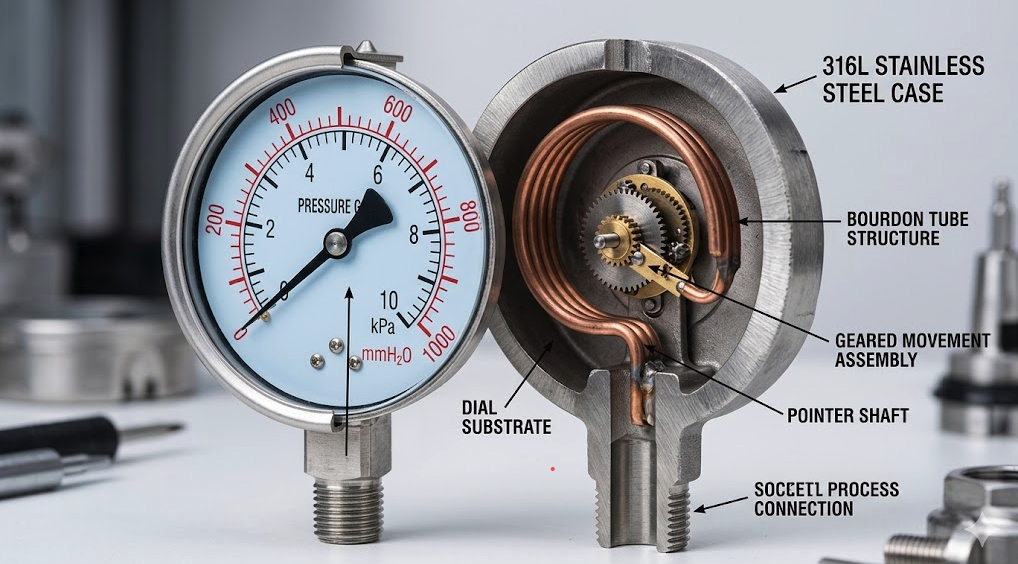
316L stainless steel: This is currently the industry standard for overcurrent components and housings. That “L” stands for low carbon and is specifically designed to deal with intergranular corrosion and stress cracking.
Corrosion resistance: In addition to dealing with the internal medium, the shell must also be able to withstand external beatings. High-grade stainless steel can ensure that even if it is sprayed with industrial cleaning agents or blown by salt spray every day, the dial is still clear and easy to read, and the functions are not left behind.
Engineering Accuracy
A true explosion-proof watch, the soul lies in its “explosion-proof” mechanical design. It’s completely different from ordinary meters. This thing is specially made to withstand the surge of internal pressure.
Internal suppression: The shell allows a small amount of gas to enter and deflagrate internally, but it has a sophisticated “flame path” design that allows the ejected flue gas to cool down quickly as it passes through the gap, so cool that it cannot ignite the outside environment at all.
Operational accuracy: Safety is not something that can be bargained for. When I selected the model, Thunderbolt required ±1.0% FS or higher accuracy. Only when the data is accurate can the parameters in the P&ID drawings be counted.
Solving Vibration Problems
Next to pumps, compressors or heavy machinery in refineries, high-frequency vibrations will make the needle “swing” impossible to read, and will also cause the Bourdon tube to tire the metal in advance.
Glycerin vs. Silicone oil: Glycerol filling is a routine operation for shockproof lubrication and has the highest cost-effectiveness. But if it is in extreme environment with great temperature difference, I will switch to silicone oil, which has a more stable viscosity and will not freeze and become unable to turn because of cold weather.
Protect the Bourdon tube: The damping effect of the filling can suppress the flutter of the internal gears and Bourdon tube. This is not only to allow the operator to see the readings clearly, but also to greatly extend the calibration cycle, saving you from having to remove and recalibrate every five days.
Integration And Installation
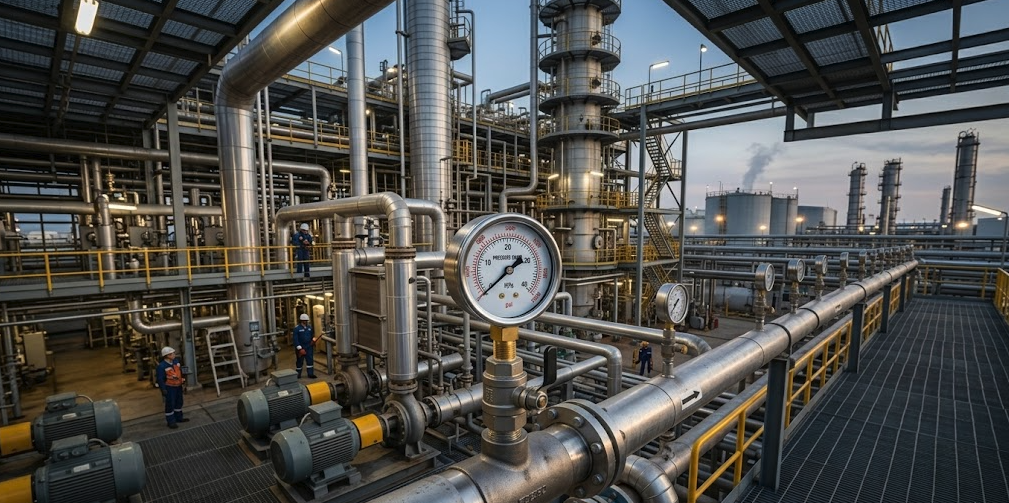
Connecting threads: Whether you use the North American 1/2″ NPT or the European G1/2, threading must be done very well. I have seen many cases of seal failure due to thread burrs, which is a big no-no in explosion-proof areas.
Environmental protection: IP65 or IP66 rating is very critical, especially in workshops that often require high-pressure water flushing or are filled with dust. If water vapor or dust gets in, the internal precision parts will quickly rot.
System integrity: Finally, be sure to check the range again with the operating limit of the system to ensure that the data obtained is true and reliable. Only then can the automated control of the entire production process be considered reliable “eyes”.