 Dypressuregauge
How Accurate Are Digital Thermometers
For those of us who are professionals in industrial and laboratory precision measurement, the accuracy of digital thermometers usually falls in the range of ±0.05°C to ±1.0°C. But this is not absolute and depends largely on what sensor is plugged into the device ——is it a platinum resistor, a thermocouple, or a high-precision thermistor.
True “accuracy” is by no means a rigid number in the factory manual. It is actually a composite value determined by the sensor’s resolution, calibration status, and resistance to thermal drift and electromagnetic interference. For example, a Class A-rated RTD can push the tolerance to an extremely narrow ±0.15°C at 0°C, but if you switch to a standard K-type thermocouple, the error range may be directly extended to ±2.2°C or 0.75%. So I think that when it comes to process accuracy, choosing the right sensor type is more than half the success. Moreover, to ensure that the readings are not “a flash in the pan”, professional digital instruments must take into account the quality of the A/D converter and the influence of the probe insertion depth on eliminating thermal conductivity errors in the shank.
Sensor Technology
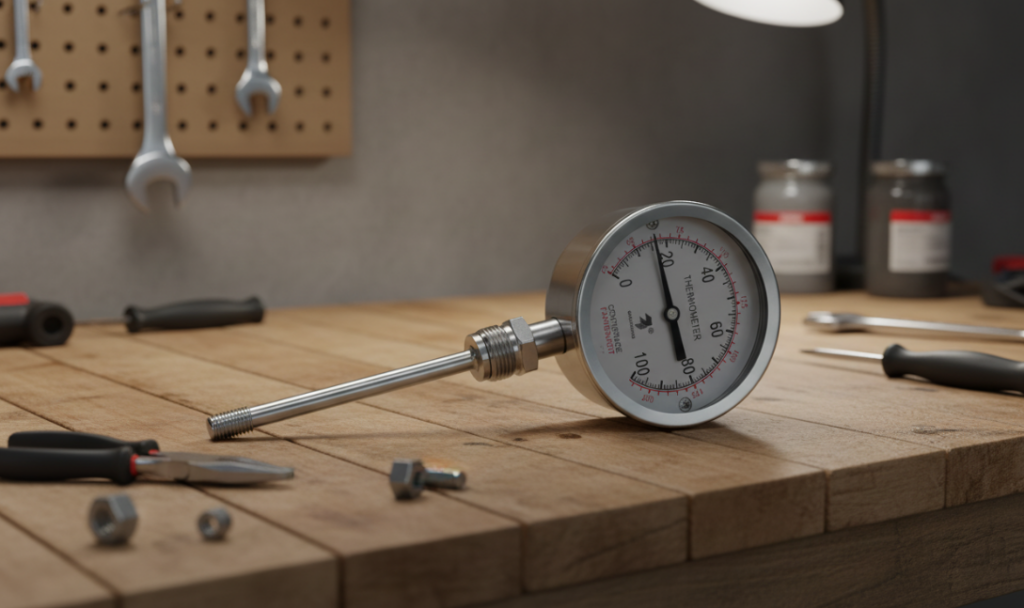
The benchmark accuracy of a digital thermometer is ultimately determined by its “heart’s”—— internal sensors. If you can’t figure out the nuances between these technologies, you’re bound to fall into a trap when choosing tools for industrial applications.
- RTD
In particular, the Pt100 and Pt1000 type numbers are simply the gold standard in the measurement community regarding “stability and repeatability”. Class A-level RTD can only give such a narrow margin of error as ±0.15°C. Their advantage comes from the extremely regular resistance characteristics of platinum metal. This thing is very stable over time and can minimize long-term drift. - Thermistors
If you’re making highly sensitive measurements within a limited temperature range, thermistors often perform amazingly well, with accuracies of ±0.05°C to ±0.1°C. There is one caveat, though: their nonlinear response is severe, so they rely heavily on high-quality internal circuits for correction, otherwise accuracy is just empty talk. - Thermocouples
This thing is widely used because of its fast response and wide temperature range,they usually rank last in accuracy. Like a standard K-type thermocouple, the tolerance is around ±2.2°C. This accuracy is limited mainly because “cold-end compensation” is not done enough, plus it outputs a microvolt-level signal that is too easily disturbed by noise.
Calibration And Traceability
The accuracy of a digital thermometer really only depends on the state of the thermometer when it was last calibrated.
NIST Traceability: This ensures that your device’s readings can be traced back to international standards through an uninterrupted chain of comparisons.
Resolution vs. Precision: I have to nag two words about this, many people will be deceived. Some devices have displays that can display up to 0.01°C, but if it is calibrated to an accuracy of only ±0.5°C, the extra decimal places are meaningless and are purely visual comfort.
Thermal Drift: Sensors drift “age” over time, especially with long-term exposure to extreme temperatures. If not calibrated regularly, the so-called ±0.05°C will quickly go off the rails.
External Variables That Can Ruin Accuracy
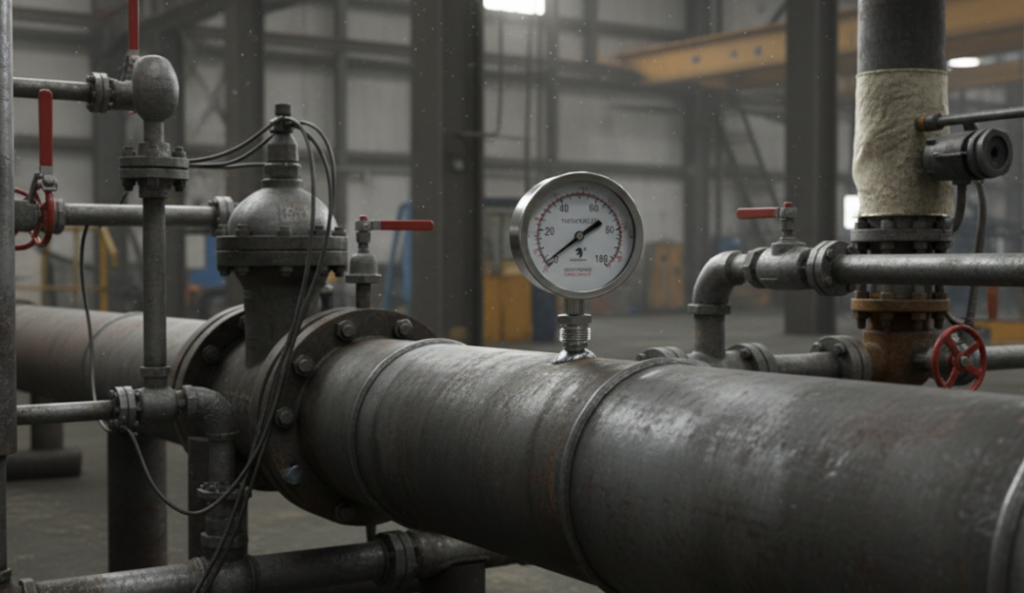
In complex environments such as laboratories or factories, the “true accuracy” of digital thermometers is often challenged by external interference, causing the data to roll over directly.
Electromagnetic Interference
Digital instruments are essentially electronic devices. In environments with heavy machinery or radio frequencies, EMI will bring “noise” into the A/D converter, allowing you to see the readings jump around. So, professional thermometers usually do shielding, and cheap ones are simply not comparable in this regard.
Shank thermal conductivity and insertion depth
This is the most common low-level error when measuring liquids or gases. If the probe is not immersed deep enough, heat will flow down the probe’s metal rod to the outside environment. This creates a temperature gradient that causes the sensor to not measure the true temperature of the medium at all. To eliminate this error, strictly adhering to the insertion depth required by the manufacturer is the basic skill.
The Impact Of A/D Converter Quality
Even if you’re using the world’s top physical sensors, if the internal A/D converter sucks, it’s a no-brainer. The converter must be able to translate extremely small resistance or voltage changes into digital signals without introducing quantization errors. High-end digital thermometers use high-resolution A/D converters, which are worthy of the level of precision of Class A RTD.
To Conclude
How accurate is a digital thermometer? There is no guarantee in this matter. It is actually the result of the combined efforts of sensor selection, rigorous calibration and correct operating techniques. As long as you choose the right sensor and ensure NIST traceability, controlling the accuracy to a ceiling level of ±0.05°C is completely achievable.
Author: David Miller
I’ve spent my career navigating the technical demands of laboratories and industrial sites. My work focuses on the fine details of temperature measurement, from NIST-traceable standards to the physical nuances of sensor performance. I’m passionate about bridging the gap between complex engineering concepts and practical, hands-on precision for professionals in the field.