 Dypressuregauge
What Is The Purpose Of Calibrating A Bimetallic Thermometer
The core purpose of calibrating a bimetallic thermometer is only one: to ensure that “uncompromising” accuracy when monitoring the internal temperature of food. This is the core line of defense against foodborne illness in any HACCP program.
Regular calibration by freezing or boiling point methods is essential. You have to make sure that the temperature probe’s reading error is within ±2°F or ±1°C. The reason why it is so true is that once the reading goes off, the food may face a huge risk of incomplete cooking or uncontrolled cold/hot storage temperature. Calibration is intended both to comply with the FDA’s Codex Alimentarius and the rigid regulations of the health department, and to pull back off-center readings after mechanical wear or accidental bumps to maintain consistent product quality.
Ensuring Food Safety Through HACCP Compliance
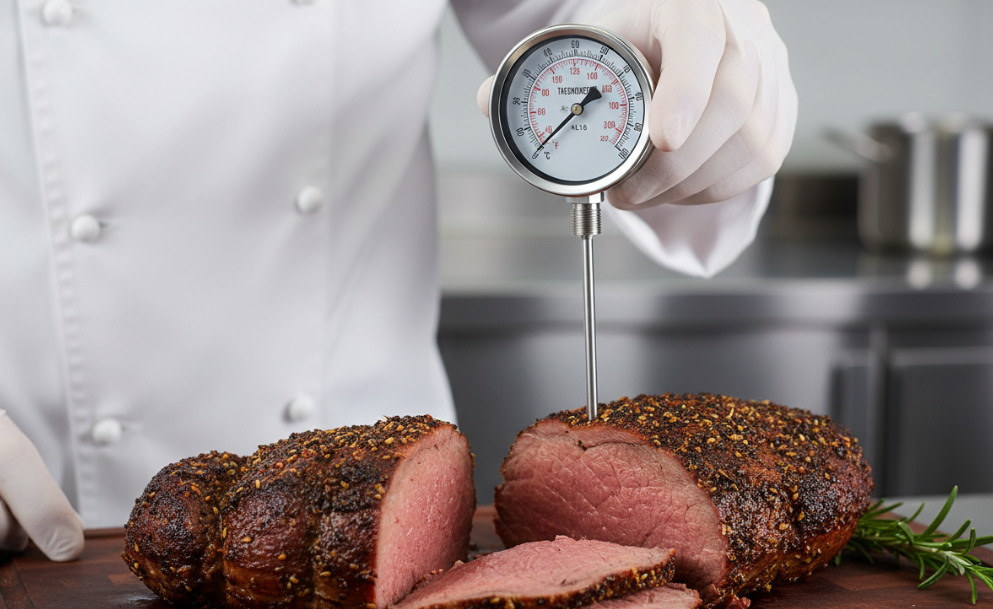
In a professional commercial kitchen or industrial food processing environment, a bimetallic thermometer is the first line of defense for safety. The essential significance of calibration lies in its role in the HACCP system. If the instrument itself is inaccurate, then the so-called “critical control points you monitor ”——whether during the cooking, cooling, or storage phases—— are all blind lights.
Only by being precise can you truly be sure that biohazards like Salmonella or E. coli have been reduced to safe levels. Many large-scale foodborne illness outbreaks are often traced back to a temperature difference of several degrees at a key link.
Achieve ±2°F “Hard Standard”
Accuracy has never been a luxury in this line, but a regulatory imperative. The FDA’s Codex Alimentarius clearly states: A thermometer used to measure the temperature of food must have an accuracy of ±2°F.
Why are these times so important? Because a slight deviation means that your steak may just fall into the °dangerous temperature zone° 41“F – 135”F. In this interval, bacteria multiply at an astonishing rate.
Physically, bimetallic thermometers differ from digital sensors in that they rely entirely on the expansion and contraction of internal mechanical coils. Since it’s mechanical, you make sure that this mechanical movement and the scale on the dial are perfectly aligned, and that’s the calibration job.
Freezing Point Method Vs. Boiling Point Method
To implement calibration, we usually use two standardized verification methods:
Freezing Point Method: This is generally considered the safest method. Insert the probe into the mixture of crushed ice and water and the reading must accurately show 32 °F.
Boiling Point Method: Place the probe in boiling water and the target reading is 212 °F. But in practice, I often remind everyone to pay attention to altitude——the higher the altitude, the lower the boiling point. If you don’t include this, your calibration will be wrong.
Doing these tests regularly essentially checks whether the sensor’s response to changes in thermal energy is still maintaining the sensitivity it should be.
Resistant To Physical Wear And Environmental Drift
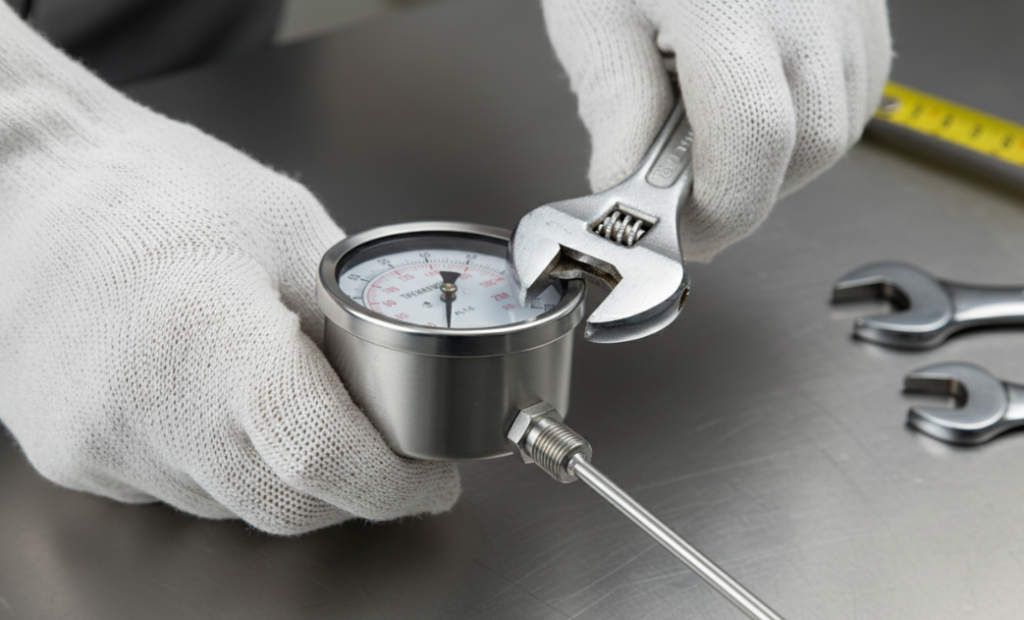
Calibration is designed to correct for so-called “reading drifts”, which are usually caused by:
Physical impact: Slippery hands are common in the kitchen. A thermometer dropped on the ground may directly vibrate and displace the internal induction coil.
Thermal shock: Stuffing a thermometer from a hot oil pan into a freezer immediately; this extreme temperature fluctuation can cause stress fatigue in metal parts.
Daily loss: After long use in high-intensity environment, mechanical parts will naturally move. That’s when you have to use that hex nut under the dial to make manual fine adjustments.
Regulatory Compliance And Consistency Of Quality
In addition to safety, calibration is also about legal responsibility and operating level. The inspector at the health department will definitely check your thermometer calibration records during the audit. If you can’t produce evidence or the readings jump around, you can be given a warning and a fine at best, or simply suspend business for rectification at worst.
You want every meal to have the same meat and texture, and you have to rely on this calibrated, high-precision instrument. Ultimately, food safety compliance is not only about protecting diners, but also about preserving the business’s reputation.
Author: David Miller
“I am a food safety specialist with years of experience in conducting rigorous kitchen audits and implementing HACCP programs. Throughout my career, I’ve seen firsthand how precision—or the lack of it—can make or break a food service operation. My mission is to bridge the gap between regulatory requirements and daily kitchen practices, helping culinary teams maintain uncompromising standards through proper tool maintenance and technical expertise.”