 Dypressuregauge
What Is The Purpose Of Calibrating A Bimetallic Thermometer
The most fundamental purpose of calibrating bimetal thermometers is to ensure the absolute accuracy of temperature. This is a mandatory requirement to prevent foodborne illness, avoid cross-contamination, and fully comply with FDA food regulations. In a high-intensity environment like a commercial kitchen, thermometers are often subjected to various physical impacts-such as an employee dropping them on the ground-or experiencing extreme temperature changes. These emergencies can lead to metal fatigue, or directly offset the internal bimetal temperature sensing coil, resulting in false readings and inaccurate measurement results.
At ordinary times to engage in routine maintenance, such as the freezing point method with the calibration nut adjustment, food safety personnel can confirm whether the thermometer is correctly measuring the central temperature of food. This ensures that food is always safely out of the “temperature danger zone”, protecting the health of consumers and keeping your business safe from health inspectors.
Although the above summary gives you a direct answer, I always emphasize to customers that for any food safety operator or quality assurance manager, understanding the underlying logic of how these factors affect daily operations is the most critical. Let’s disassemble why calibrating bimetallic thermometers is a non-negotiable, dead order.
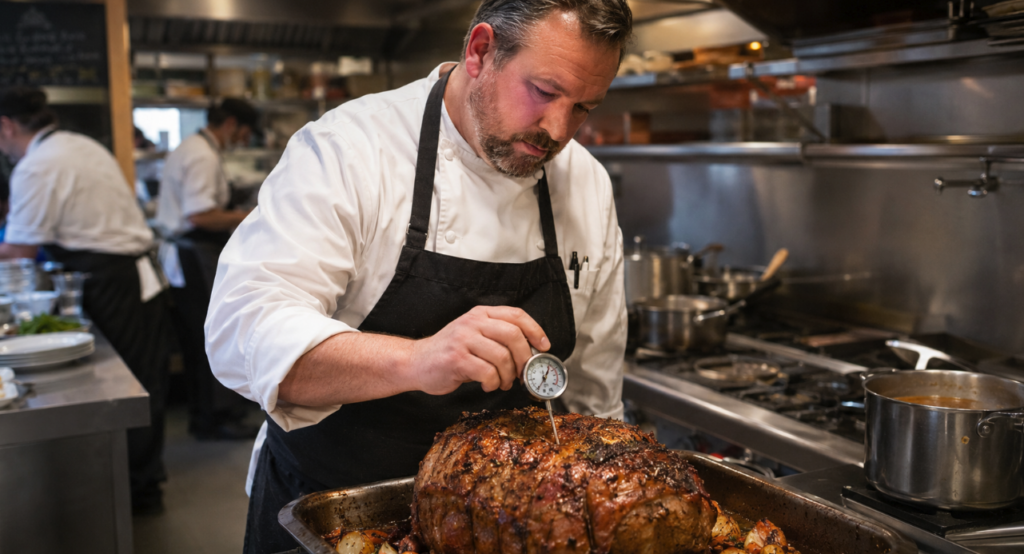
Ensure Precise Temperature Accuracy In Compliance With FDA Standards
The foundation of food safety lies in the accuracy of temperature. According to the FDA’s food regulations, any location that handles, cooks, or stores perishable food must use accurate temperature measurement equipment. Don’t think that calibrating bimetal thermometers is just a recommendation, it comes with mandatory regulatory requirements.
I have checked many thermometers that have not been regularly verified. The actual temperature of a piece of chicken breast is only 155 °F, but the dial openly shows 165 °F. That little temperature is enough to allow dangerous pathogens such as salmonella or E. coli to survive and directly cause food-borne illness. In addition, regular calibration can effectively prevent problems related to cross-contamination and ensure that the tools you use to verify safe cooking and cooling processes are fully functional in accordance with federal and local health standards.
How False Readings Come About: Physical Shock And Metal Fatigue
To understand the purpose of calibration, you have to take apart the internal structure of the thermometer. The operation of the bimetallic thermometer relies on an internal bimetallic coil-two different metals are welded together and their expansion rates are different when heated.
In the fast-paced commercial kitchen, these sensitive instruments can be said to be suffering.
Physical shock: The thermometer accidentally fell on the hard tile floor. This is the most common cause of calibration drift I encountered. That impact will instantly change the physical connection between the bimetal coil and the dial hands, giving you an immediate false reading.
Extreme temperature changes: Just pull the thermometer out of the hot soup pot, turn around and throw it into the cold storage, this operation will make the metal experience rapid thermal expansion and contraction. A long time, this inevitably leads to metal fatigue. The coil loses its original tension, and even if the thermometer has never been dropped, the measurement results will become inaccurate. The calibration is to correct the offset of these mechanical levels.
Verify Internal Temperature Through Routine Maintenance
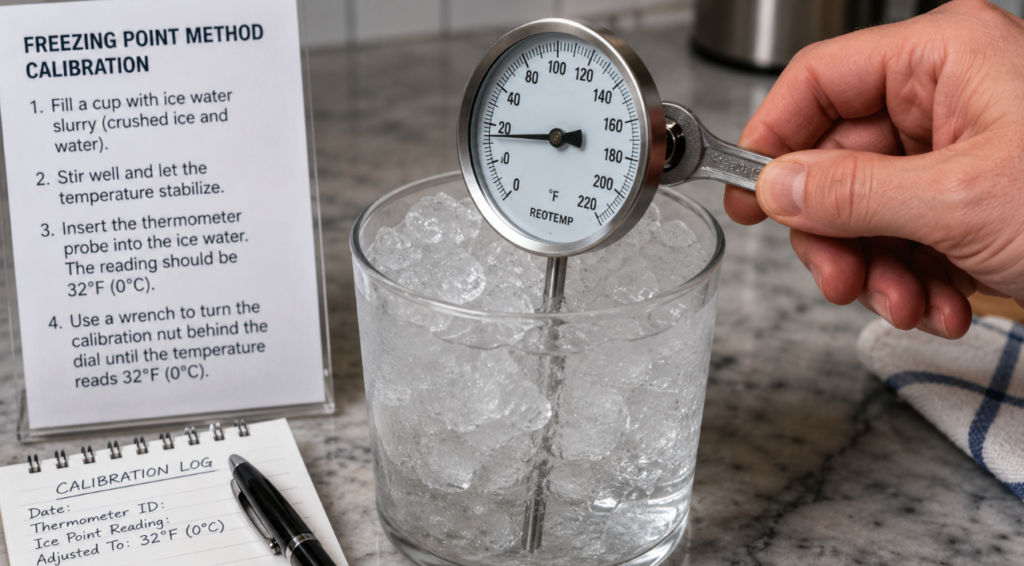
Since physical collisions and metal fatigue are inevitable destinies in a busy back kitchen, routine maintenance is the only way to ensure long-term accuracy. The purpose of calibration is to reset the instrument to a known, validated standard.
The industry recognized verification standard is “freezing point method”. By immersing the probe of the thermometer in a standardized ice-water mixture, the tester can immediately know whether the dial is accurate or not at a glance. If the thermometer reads 36 °F in ice water, you’ll have to get a small wrench to adjust the calibration nut directly behind the dial head. Turning this nut physically realigns the pointer and bimetal coil. After the adjustment, you can put 100 hearts to measure the central temperature of the food, because the reading at this time is 100 percent true.
Stay Away From The Temperature Danger Zone And Avoid The Inspector’s Ticket
Ultimately, the core purpose of this entire calibration process is risk management. When food is in the “temperature danger zone” of 41 °F to 135 °F, bacteria multiply exponentially. A calibrated thermometer is the only reliable tool in the hands of cooks to ensure that hot food is kept above 135 °F and cold food is stored below 41 °F.
By keeping food out of this danger zone, you’re not just protecting the health of your consumers, you’re actually protecting your company. It is routine for health inspectors to pull out their standard thermometers to compare and test your equipment when they come to the site for an audit. If your instrument gives a wrong reading, there are severe penalties waiting for you-high fines, a downgrade of the hygiene level, or even a direct forced suspension of business. I have seen too many of these years.
Solution: Invest In High-Quality Bimetal Thermometers
Since constant physical shocks and extreme temperature changes are the main culprits for reading errors, the simplest and cruelest way to reduce the calibration frequency is to buy some mechanically excellent and very resistant instruments.
In this regard, DY Pressure Gauge’s performance is really bright. As a manufacturer of high-quality measuring instruments, they design and produce bimetallic thermometers with heavy-duty housings and highly resilient bimetallic coils specifically designed to resist metal fatigue and fully withstand the severe physical shocks common in commercial and industrial environments.
By upgrading the equipment in your facility to DY Pressure Gauge’s thermometer, you can achieve better reference temperature accuracy, spend less time on tightening the calibration nut every day, and most importantly, it can ensure that your business is compliant, safe and free from penalties. Today, you can go to their official website to have a look and pick out those industrial and commercial temperature measurement solutions designed for the pursuit of extreme accuracy.
Author:Robert Mitchell
I specialize in helping businesses eliminate measurement errors, maintain strict FDA compliance, and protect their operations from unseen safety risks. Through my daily work with measurement instruments, I’ve seen firsthand how a small calibration drift can lead to major penalties. I share my practical insights here to help you get the absolute most accurate readings out of your equipment and keep your business running safely.